Most buyers shop for a greenhouse before answering the three questions that determine whether they will actually use it in year two. The structure is the last decision, not the first.
This guide covers all three climate categories (hot/desert, cold/northern, and temperate) from a permit-free 8×12 starter to a full year-round production setup. Sections run in the order you will need them.
- 120 sq ft
- Most-common no-permit threshold (US)Varies by state/county. Always verify locally.
- 40°F
- Min night temp most vegetables needDetermines whether you need active heating
- 10–20°F
- Temp drop from 50% shade clothNon-negotiable in hot and desert climates
- 20%
- Minimum vent area as % of floor spaceFor passive cooling to work without a fan
Before you buy
Three questions narrow 90% of poor purchasing decisions before you look at a single product listing.
- What is your USDA growing zone? Zones 3–6 need active heating. Zones 7–9 typically do not. Zones 10–12 need active cooling more than anything else.
- What will you grow, and when? Starting seedlings in spring requires a different setup than growing tomatoes year-round. One requires a brief season of mild temps; the other requires insulation, heat, and light management through winter.
- Will you use it in summer? Most people imagine a greenhouse as a spring or fall tool. If you will not manage ventilation in July, a closed greenhouse becomes a death chamber for plants.
Season Extension
Spring/fall only, no heat required
- Start seedlings 6–8 weeks earlier
- Extend harvest into November/December
- No heating system needed
- Passive ventilation sufficient
- Cheapest to run, minimal ongoing cost
Year-Round Use
Continuous production, heating required
- Grow through winter in zones 3–7
- Requires heater + thermostat (zones 3–6)
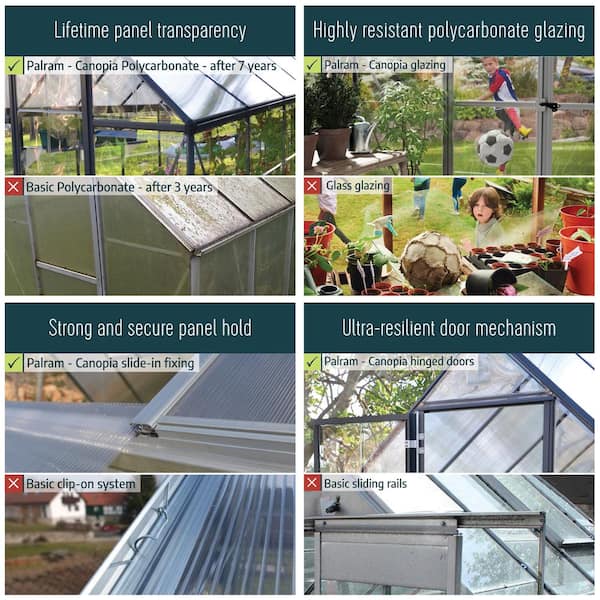
- Better glazing pays off in cold climates
- Thermal mass stabilizes night temps
- Higher setup cost, higher ongoing output
Structure types
GREENHOUSE STRUCTURE TYPES — SIDE VIEW
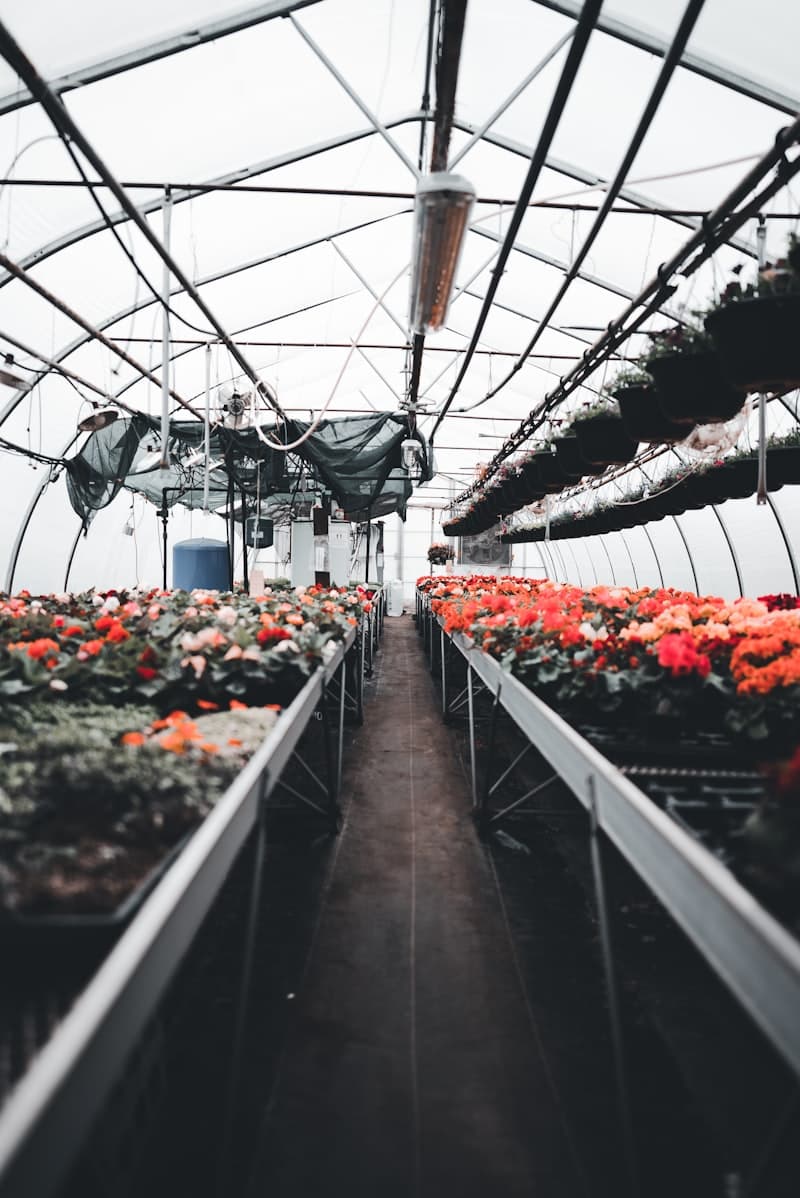
Each structure is a different bet on lifespan versus upfront cost. For most people, the polycarbonate aluminum kit wins on both counts and works in every climate with the right accessories.
| Type | Cost range | Lifespan | Best for | Biggest weakness |
|---|---|---|---|---|
| Polycarbonate aluminum kit | $300–2,500 | 15–20 yr | All climates, beginners | Wind uplift if unanchored |
| Hoop / Quonset tunnel | $150–800 | 5–10 yr | Cold frames, tight budgets | Heat retention, UV degradation |
| Wood A-frame | $800–5,000+ | 25+ yr | All climates, longevity builds | Upfront cost, rot without treatment |
| Lean-to | $400–2,000 | 15–20 yr | Space-limited lots, urban | Requires south-facing wall |
| Tempered glass | $2,000–15,000 | 30+ yr | Cold/temperate, premium builds | Weight, breakage, cost |
Size and permits
Most jurisdictions exempt detached, single-story accessory structures under a square footage threshold from building permits. 120 sq ft is the most common threshold in the US, but the number varies, and a few gotchas can trigger a permit even when you're under the limit.
GREENHOUSE FOOTPRINTS — TOP VIEW, TO SCALE
| Jurisdiction | No-permit threshold | Notes |
|---|---|---|
| Most US states (IRC) | 120 sq ft | One-story, detached, not for habitation |
| California | 120 sq ft | Verify by city; some cities are stricter |
| Texas | 200 sq ft | Many cities follow state; verify locally |
| New York | 144 sq ft | Setback rules still apply |
| Canada (varies) | 108–160 sq ft | Check provincial and municipal codes |
| United Kingdom | 15 sq m (161 sq ft) | Permitted development rights; check conservation areas |
Glazing materials
GLAZING CROSS-SECTION — HOW LIGHT AND HEAT PASS THROUGH
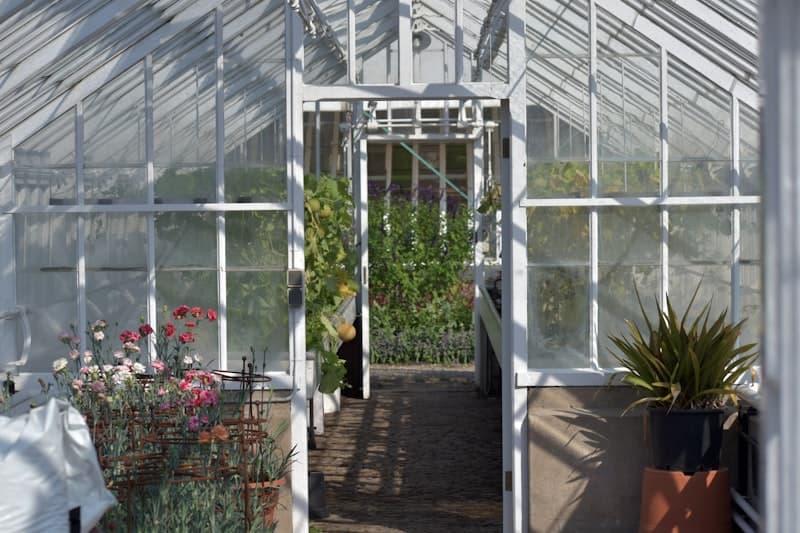
Twin-wall Polycarbonate
Recommended for most setups
- 70–80% light transmission (diffused, even)
- R-1.6 to R-2.1 insulation (R-2.1 with 8mm)
- 0.5–0.8 lb per sq ft, easy to handle
- $1.50–4 per sq ft, very affordable
- UV-resistant; replace panels in 10–15 years
Tempered Glass
Premium: specialty use cases
- 90%+ light transmission (direct, clear)
- R-1.0 (poorer than polycarbonate)
- 3–4 lb per sq ft (stronger frame needed)
- $8–25 per sq ft (higher cost)
- 30+ year lifespan, but breaks and cannot be patched
| Property | Poly film | Twin-wall poly | Tempered glass |
|---|---|---|---|
| Light transmission | 85–90% | 70–80% | 90%+ |
| R-value (insulation) | R-0.8 | R-1.6 to R-2.1 | R-1.0 |
| Weight per sq ft | < 0.1 lb | 0.5–0.8 lb | 3–4 lb |
| Cost per sq ft | $0.10–0.30 | $1.50–4 | $8–25 |
| UV resistance | Low (degrades fast) | High (10–15 yr) | Excellent (30+ yr) |
| Lifespan | 3–5 yr | 10–15 yr | 30+ yr |
Twin-wall polycarbonate diffuses direct light into even illumination across the bench, reducing hotspots and leaf scorch. Glass outperforms only when maximum optical clarity matters: orchid collections, research propagation, or high-end builds willing to pay the weight and cost premium.
Climate-specific setup
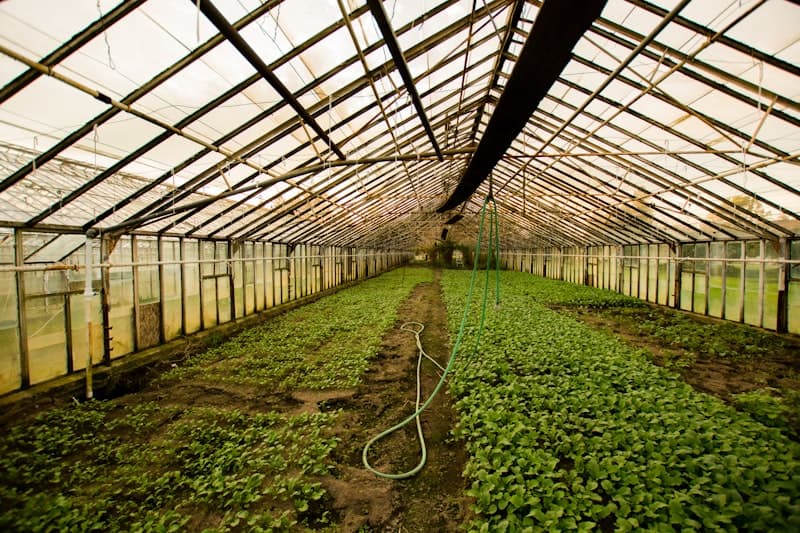
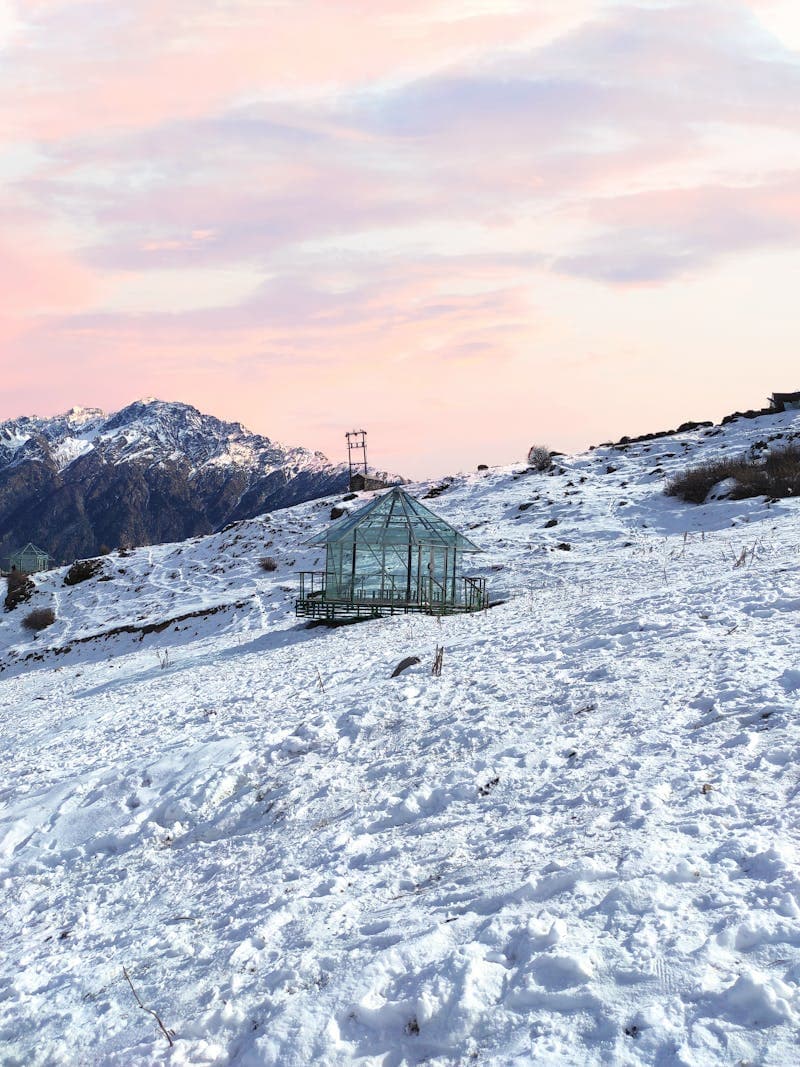
The same 8×12 polycarbonate kit behaves completely differently in Phoenix, Portland, and Minneapolis. These are the setups that actually work, organized by the three climate categories that cover most growing situations.
| Climate | Heating | Cooling | Shade cloth | Thermal mass |
|---|---|---|---|---|
| Hot / Desert | Not needed | Solar fan + shade cloth | 50% (critical) | Yes (stabilizes swings) |
| Cold / Northern | Required (propane/electric) | Passive vents fine | Optional (30%) | Yes (reduces heat cost) |
| Temperate / Mild | Optional (shoulder seasons) | Roof vent sufficient | Optional (30%) | Optional |
Ventilation and cooling
The 20% rule: your total vent area (roof vents plus base inlet vents) should equal at least 20% of your floor area for passive cooling to work. An 8×12 greenhouse (96 sq ft) needs about 19 sq ft of combined vent area. Most kit greenhouses ship with less. Budget for additional side vents or a fan.
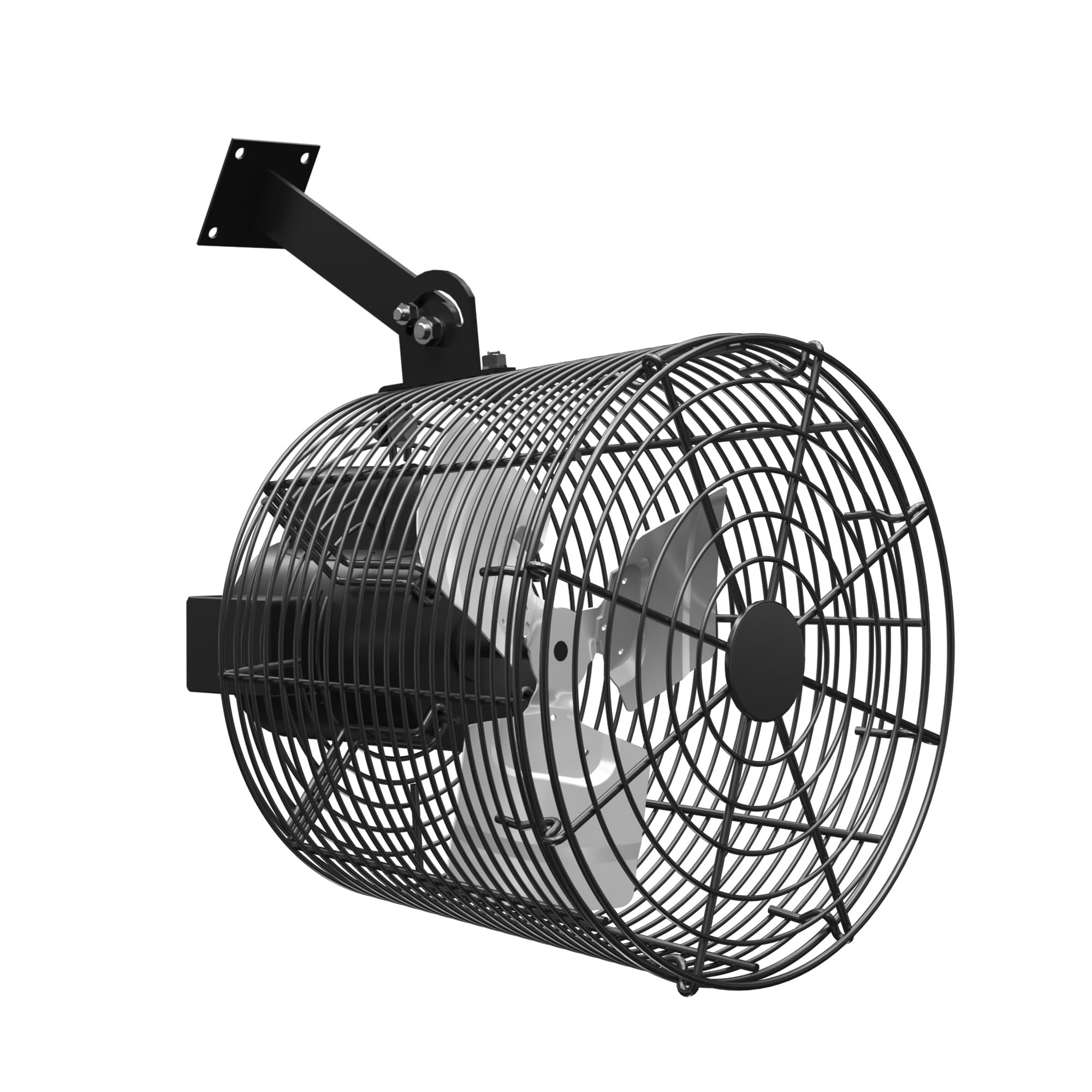
Passive ventilation (stack effect) works in temperate and mild climates. Active ventilation (a thermostat-controlled fan) is required in hot climates and in winter-sealed setups where vents are closed for heat retention.
Foundation options
The foundation affects drainage, heat retention, pest control, and whether you trigger a permit. In most situations, the answer is compacted gravel.
Compacted Gravel Base
Recommended for most setups
- Does not trigger a permit in most jurisdictions
- Excellent drainage: no standing water, no mold
- Easy to adjust or remove if greenhouse moves
- Reflects heat slightly, helps hot climates
- Cost: $50–150 materials only
Concrete Slab
Permanent: check permit trigger first
- May trigger a building permit even for exempt structures
- Permanent: difficult to change or move
- Can trap moisture if drainage is not built in
- Retains heat, useful in cold climates
- Cost: $500–2,000+ depending on size
Infrastructure planning
Plan water and electrical routing before the greenhouse goes in, not after the ground is packed. Running lines later means digging up your yard twice.
INFRASTRUCTURE ROUTING — TOP VIEW (TRENCH BOTH LINES AT ONCE)
Water line: Run ¾" PVC underground from the nearest hose bib, along the fence line, then branch to the greenhouse entry. Depth: 12–18 inches (deeper in freeze zones). Inside the greenhouse, install a shutoff valve, then a pressure regulator (drip systems need 20–30 PSI), then the drip manifold.
Electrical conduit: Even if you have no immediate plan for electricity in the greenhouse, run an empty ¾"–1" conduit alongside the water line in the same trench, offset 6 inches. Terminate at the greenhouse corner in a junction box. This costs $20–40 in materials and saves a full day of re-digging when you eventually add a heater, exhaust fan, or grow lights.
Placement and orientation
Four placement rules cover most situations.
Orient the ridge east-west. The long axis of the greenhouse faces south. In winter, this maximizes solar gain on the south-facing wall, the most important single factor for passive heating. In summer, the roof angle reduces afternoon heat load.
Respect setbacks. Even exempt structures must comply with setback rules, typically 3–5 feet from property lines. Placement in the front yard is prohibited in almost all residential codes. Check your local zoning before you dig.
Use existing wind protection. Position the greenhouse near an existing fence or structure for partial wind protection, but leave at least 3 feet of clearance on all sides for airflow. In open, exposed locations (desert flats, prairie, hillsides), anchor every corner post in concrete.
Anchoring shade cloth
In desert and wind-exposed locations, a properly anchored shade cloth system is effectively a second structure. Build it like one. A shade cloth system that fails in a wind event does no good when you need it most.
Orientation matters here. An east-west ridge puts the long, high wall on the south side — exactly where afternoon sun hits hardest. When you build your post system, concentrate coverage on that south face and the roof. The north side needs almost none. Getting the orientation right first means you can use less cloth and still block the heat that kills plants.
What you are building: 4–6 dedicated posts positioned 2–3 feet away from the greenhouse walls, connected by cable or rope, with shade cloth attached to the cable and tensioned with turnbuckles.
Materials: 4×4 pressure-treated posts or galvanized steel T-posts, fast-setting concrete, stainless eye bolts, UV-rated steel cable or rope, turnbuckles (one per cable run), ball bungees or carabiners to attach the cloth.
| Step | Specification | Why it matters |
|---|---|---|
| Post hole depth | 24–30 inches | Desert soil alone won't hold under wind uplift |
| Post hole width | 10–12 inches | Enough concrete for a solid footing |
| Height above greenhouse | 12–24 inches | Allows an airflow gap under the cloth |
| Post layout | 4 corner posts + 2 midspan on long sides | Midspan posts prevent fabric sag and flutter |
| Concrete type | Fast-setting, fully cured before tensioning | Wet soil shifts; cure time matters |
To attach the cloth: install eye bolts at the top of each post, run cable between them in a perimeter circuit, attach the shade cloth to the cable with ball bungees or carabiners (not zip ties, which degrade in UV), and tension each cable run with a turnbuckle. The cloth should be snug but not rigid. A little flex prevents tearing in gusts.
Interior layout
The internal arrangement makes a bigger practical difference than the greenhouse size. An optimized 8×12 outperforms a poorly arranged 10×16 at nearly everything.
INTERIOR LAYOUT — 8×12 GREENHOUSE, TOP VIEW
North bench, tall plants: Tomatoes, cucumbers, trellis crops. Their height does not shade anything else because nothing is growing further north inside the greenhouse.
South bench, low plants: Greens, herbs, seedling trays. The south side receives the most direct light. Put your most light-hungry plants there, especially from October through March in zones 5 and colder.
Center walkway: 2 to 2.5 feet wide. Narrow enough to reach both benches from the center; wide enough to walk through with a watering can or flat of seedlings.
Thermal mass position: Dark 55-gallon water barrels on the north wall. They absorb heat from above and the sides during the day without blocking south-facing light. At night they release heat passively into the space.
Quick start guide
If the full guide feels overwhelming, stop here. Every situation collapses down to one of three setups. Pick the one that matches your climate. Buy those five things. Add complexity only when you feel the need for it.
- Desert / Hot
- Setup bundle8×12 kit · 50% shade cloth · solar fan · drip irrigation · thermometer
- Cold / Northern
- Setup bundle8×12 kit · propane heater · bubble wrap liner · water barrels · thermometer
- Temperate / Mild
- Setup bundle10×12 kit · roof vent · drip irrigation · 30% shade cloth · thermometer
The greenhouse that gets used every day is better than the optimized greenhouse that feels like homework. Start simple, add complexity when you feel the need for it.
Final checklist
These are the steps in the order you will need them, from first decision through your first growing season.
- Determine USDA growing zone and primary use (season extension vs. year-round)
- Decide structure type: polycarbonate kit for most; wood or glass if budget allows
- Choose target footprint: stay under permit threshold or plan to pull a permit
- Check local setback requirements for your specific parcel and zoning code
- Confirm HOA restrictions on greenhouse size, placement, or visual appearance
- Choose foundation: compacted gravel (recommended) vs. concrete slab (verify permit trigger first)
- Plan water line route before breaking ground: hose bib to greenhouse entry
- Run empty electrical conduit alongside water line in the same trench
- Conduct shadow test: stake footprint and photograph at 9am, noon, and 3pm
- Orient ridge east-west with door facing east or northeast
- Confirm setback clearances on all four sides
- Assemble frame per manufacturer specs, installing all anchors and cross-bracing
- Anchor every corner into concrete or ground anchors. No exceptions in exposed locations.
- Install base vents and roof vent or fan before first use. Never close up without exhaust.
- Set up drip irrigation system and timer before planting
- Hot climates: install 50% shade cloth on roof and west wall before temperatures rise
- Build shade post system if mounting cloth externally: 4–6 posts in concrete, cable, turnbuckles
- Cold climates: insulate north wall, add dark water barrels on south wall
- Orient plants: tall crops on north bench, low crops on south bench, thermal mass on north wall
- Log min/max temperatures daily for the first two weeks before relying on the greenhouse for critical crops