Gardeners spend more on seeds than on soil. That's backwards. Seeds are cheap. Soil is where every battle is won or lost — great soil makes mediocre seeds produce abundantly, and poor soil turns expensive heirlooms into expensive failures. Fix the soil first. Everything else follows.
If your tomatoes yellow in June despite regular fertilizing, the problem is almost certainly not nutrition. It is the biology that makes nutrition available. Get the texture right, feed the microbes, and the fertility follows on its own.
- 45%
- Minerals in healthy soilSand, silt, clay particles
- 25%
- Water by volumeIn ideal growing conditions
- 25%
- Air by volumeEssential for root respiration
- 5%
- Organic matterThe hardest part to build
What soil actually is
Soil is not dirt. Dirt is what you wash off your hands. Soil is a living system made of mineral particles, water, air, and organic matter in various stages of decomposition, all held together by a biological community that includes bacteria, fungi, protozoa, nematodes, and earthworms.
That last part matters. The biology is not incidental — it is the mechanism. Nutrients become available to tomatoes, peppers, and squash through the activity of soil microorganisms, not because those nutrients are simply sitting in the soil waiting. When you kill the biology — with fumigants, compaction, or excessive synthetic fertilizer — you make nutrients less available, not more. This is why sick plants often get sicker when you pour on more fertilizer.
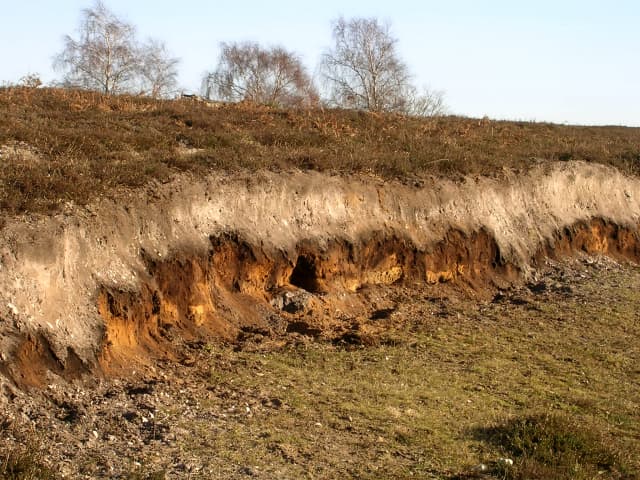
SOIL PROFILE — VERTICAL CROSS-SECTION
Soil texture: the mix that determines everything
Texture is the ratio of sand, silt, and clay particles. Get it wrong and your plants will drown in standing water, or wilt daily even when you water. Texture controls drainage, aeration, and how tightly nutrients bind. You cannot change texture easily — but compost improves every type, which is why it is always the first answer.
Clay soil
Too much of a good thing
- Holds water well — too well; roots rot in wet spells
- Rich in nutrients but poorly aerated
- Sticky when wet, hard as concrete when dry
- Fix: add compost, gypsum, and avoid compaction
- Takes years to improve significantly
Sandy soil
Quick to drain, quick to dry
- Drains fast — nutrients leach out with every rain
- Easy to work and rarely compacts
- Warms up quickly in spring
- Fix: add compost, worm castings, and water frequently
- Improves faster than clay with organic matter
Loam sits in the middle: roughly 40% sand, 40% silt, and 20% clay. It drains well without drying out, holds nutrients without becoming waterlogged, and provides the structure that roots need. If you are building a new bed, buying quality topsoil blended with compost is the fastest way to start with loam.
The jar test: read your soil in 24 hours
Before amending anything, know what you have. The jar test takes five minutes to set up and gives you a clear picture of your soil texture without any lab equipment.
- 1.
Fill a quart mason jar 1/3 full with dry garden soil.
- 2.
Top off with water and 1 teaspoon of liquid dish soap. The soap disperses clay particles.
- 3.
Shake hard for 2 minutes, then set on a level surface and leave it.
- 4.
After 15 minutes: measure the sand layer that settled on the bottom.
- 5.
After 2 hours: measure the silt layer that settled on top of the sand.
- 6.
After 24 hours: measure the clay layer still suspended above the silt. The cloudier the water at 24 hours, the more clay you have — clay particles are so fine they take days to fully settle.
Divide each layer's depth by the total soil depth to get percentages. Plot them on the texture triangle. This is not perfectly precise, but it tells you clearly whether you are dealing with clay, loam, or sand — which is exactly what you need to know before spending money on amendments.
The biology beneath the surface
Tilling is the single most damaging thing you can do to garden soil. Each pass shreds fungal networks that took months to build, collapses the pore structure that holds air and water, and forces the entire biological community to restart from zero. It also buries weed seeds that were sitting harmlessly on the surface — and now they germinate in force.
You are not growing plants. You are growing soil, and the plants come along for the ride. The gardener's job is to feed the soil biology. The biology feeds the plants.
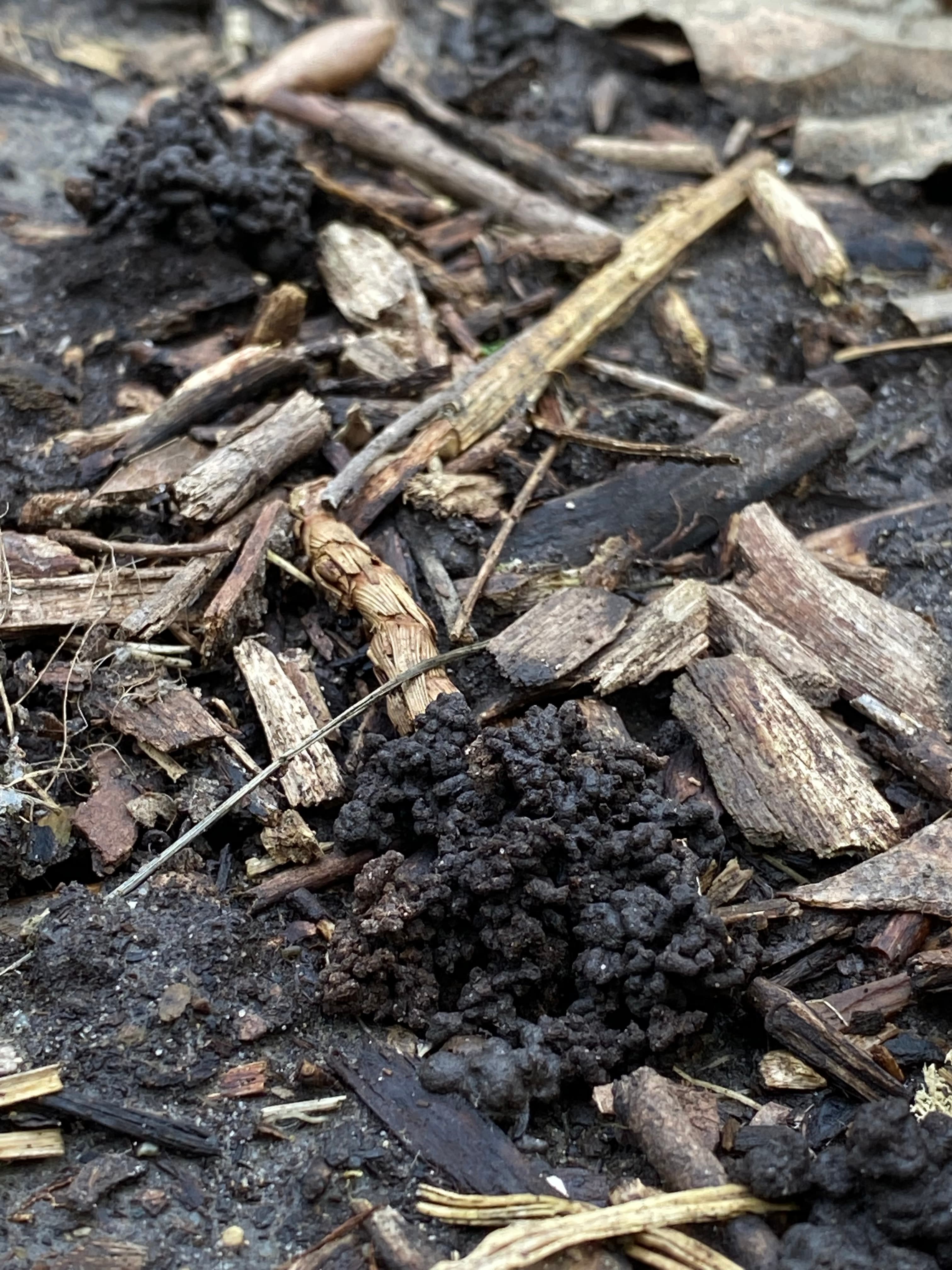
The practical rules: add compost on top, not dug in. Use a broad fork to aerate without inverting layers. Never walk on beds — keep permanent paths and protect the growing area from compaction. Leave roots in the ground when you pull spent plants; they decompose and leave channels that aerate the soil far better than any tool.
Composting: the only input your garden actually needs
Add compost and you fix drainage, water retention, nutrition, disease suppression, and biology in one move. No synthetic fertilizer does more than one of those. Compost is the only amendment that improves clay soil and sandy soil simultaneously, feeds the food web, and gets better every year you use it.
COMPOST PILE — CUT-AWAY VIEW
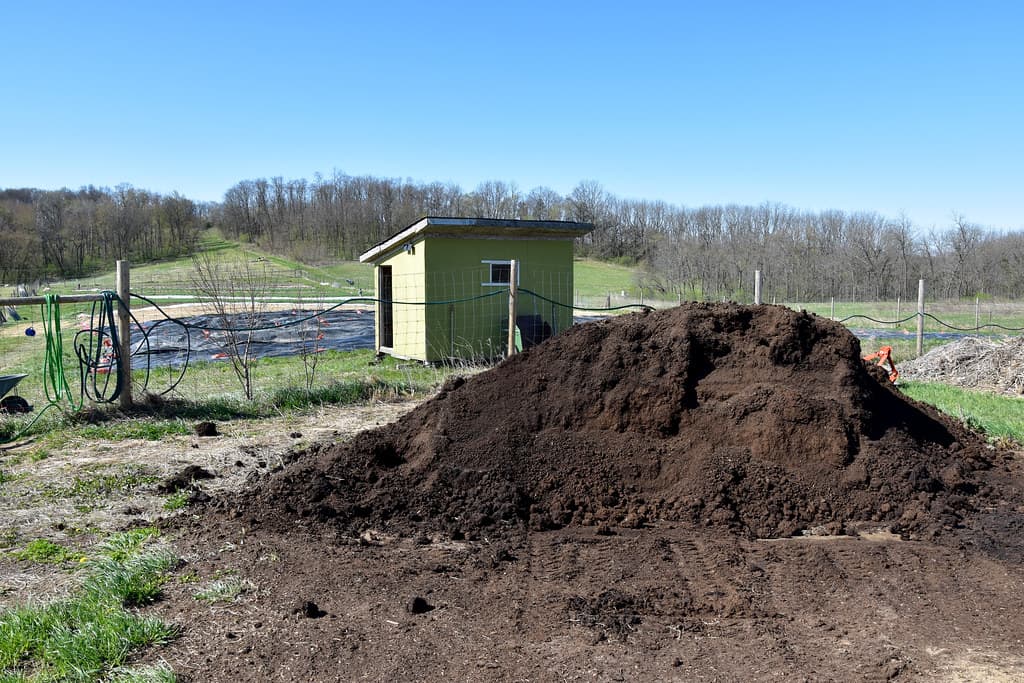
The key ratio is 3 parts brown (carbon-rich) to 1 part green (nitrogen-rich) by volume. Brown material: dry leaves, straw, cardboard, wood chips. Green material: kitchen vegetable scraps, fresh grass clippings, coffee grounds. Get this ratio wrong and you get either a pile that does nothing (too much brown) or a pile that smells (too much green).
In a managed hot pile, you can have finished compost in 6-8 weeks. In a lazy cold pile where you just keep adding material, it takes 6-12 months. Both work. Choose based on how much compost you need and how much time you want to spend.
Amendments: what to add and when
An amendment is anything you add to soil to improve it. Some provide nutrients. Some adjust pH. Some improve structure. Most should not be added without knowing what your soil already has — adding unnecessary amendments is expensive and creates imbalances that are harder to fix than the original problem.
| Amendment | What it does | When to use | Rate |
|---|---|---|---|
| Compost | Improves all textures, feeds biology | Always — every season | 2-4 inches on top |
| Lime (calcitic) | Raises pH in acidic soil | When pH below 6.0 | 5-10 lbs per 100 sq ft |
| Sulfur | Lowers pH in alkaline soil | When pH above 7.5 | 1-2 lbs per 100 sq ft |
| Perlite | Improves drainage and aeration | In clay soil or containers | 10-20% of mix by volume |
| Worm castings | Adds biology, gentle nutrition | At transplanting | Up to 25% of mix |
| Rock phosphate | Slow-release phosphorus | When phosphorus is low | Per soil test results |
| Greensand | Slow-release potassium + minerals | Long-term building | Per soil test results |
Why pH matters more than most gardeners think
If you have ever poured fertilizer on plants that look sick and watched them get sicker, pH lockout is the likely reason. Soil pH determines nutrient availability. The same soil with the same nutrients behaves completely differently at pH 5.5 versus pH 6.5. At 5.5, phosphorus, calcium, and magnesium lock up and become unavailable regardless of how much you have added. Iron and manganese become too available — sometimes to toxic levels.
Most vegetables grow best between pH 6.0 and 7.0, with 6.5 being close to ideal for the widest range of crops. Blueberries are the exception — they want 4.5-5.5. Keep them in a separate bed with separate soil management.
Getting a soil test: the $20 investment that saves hundreds
A $20 soil test from your state land-grant university tells you exactly what your soil has, what it is missing, and how much of each amendment to add. Skipping the test and guessing costs more than $20 in wasted amendments in a single season — and can create imbalances that take years to correct. The University of Massachusetts Amherst Soil and Plant Tissue Testing Laboratory is the most widely used option for US gardeners and ships results with specific amendment recommendations.
Take samples from 10-15 spots across your garden at 6-inch depth. Mix them together, let dry overnight, and send in about 1 cup of the mixed sample. Test in fall after the season ends, so you can amend over winter before spring planting.
Test every 2-3 years, or after making large amendments, to track whether what you are doing is working. Soil changes slowly. The work you do this year shows up in your tests 2-3 years from now. That is frustrating — and also the point. Soil building is a long-term investment in a system that pays you back for decades.