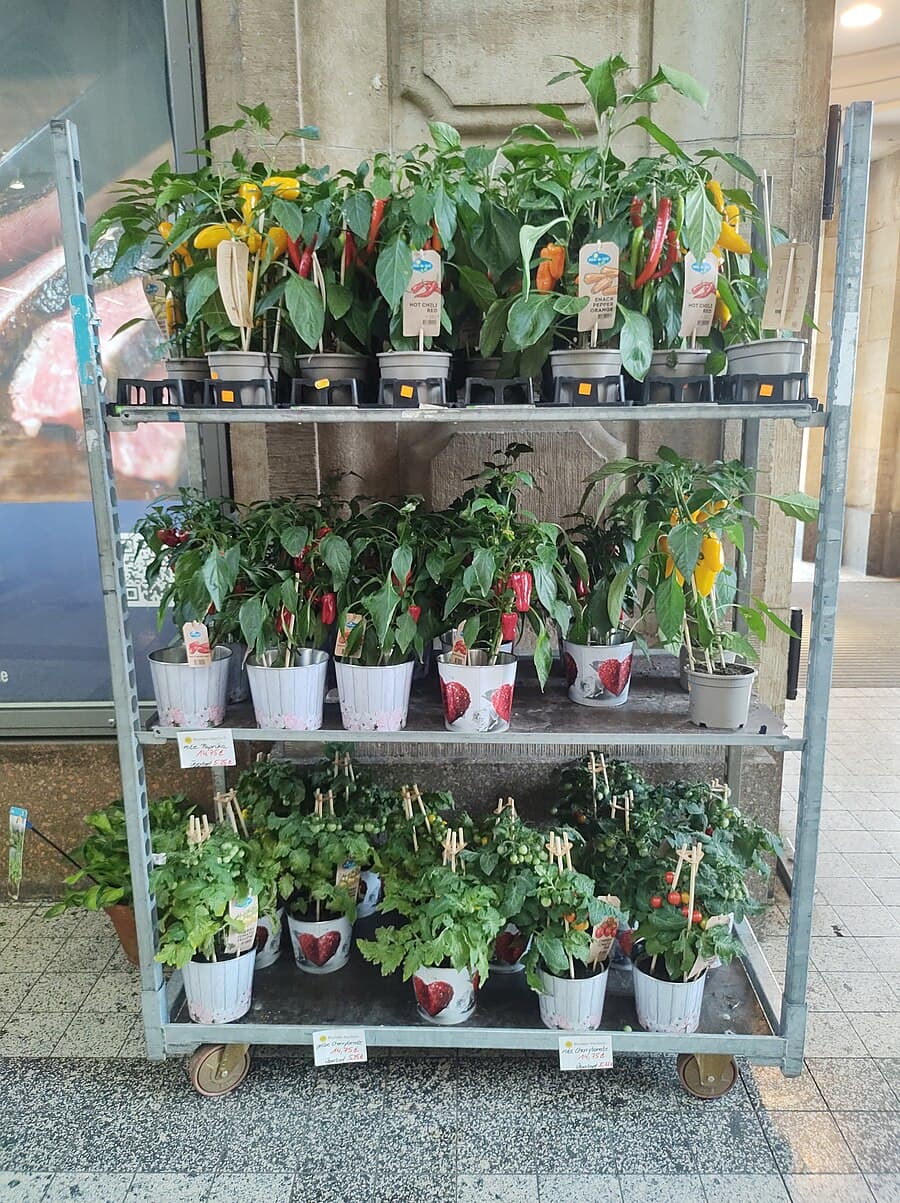
The little basil plant from the grocery store is not a healthy plant. It's a seed-dense plug crammed under greenhouse lights, sold before it's ready, and shipped somewhere darker and drier than it has ever been. You bring it home, set it on the windowsill, and watch it fall apart over two weeks.
That's not a brown thumb. That's a plant that was never built for a windowsill. Growing herbs indoors actually works once you understand the real variable driving success or failure. It's not the pot, not the soil, not the watering schedule. It's light. Get light right and most other mistakes become forgivable.
What those "easy herb" lists don't tell you
Most "best herbs for indoors" lists are aspirational at best and misleading at worst. Basil demands full sun. Cilantro bolts once your kitchen hits 75°F. Rosemary is forgiving outside but hates heated indoor air with a specific intensity. Mint and chives are the genuine exceptions: both tolerate lower light, recover from mistakes, and grow fast enough to give you feedback. Start there if you're just getting started.
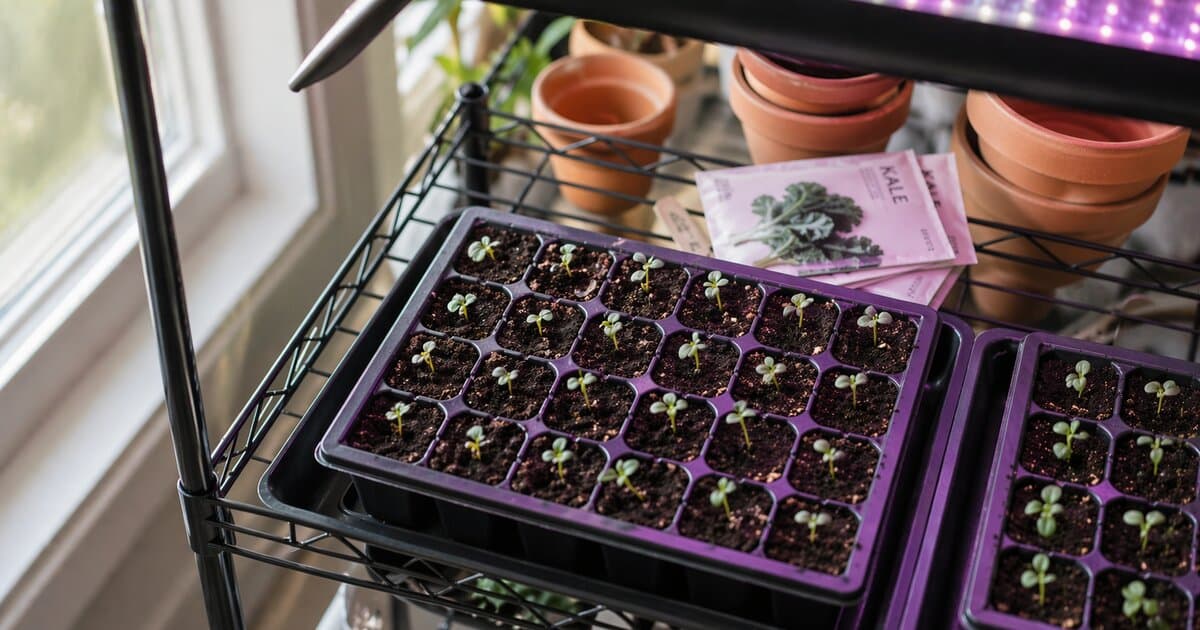
A south-facing window in summer opens up basil, parsley, and chives. A north-facing window in winter narrows your options to mint and not much else. The honest fix for limited light isn't choosing easier herbs. It's a grow light, which most guides mention once and then never explain properly.
- 6 hrs
- Minimum lightMost culinary herbs need 6–8 hours of direct sun daily
- 65°F
- Ideal temperatureMost herbs perform best between 65 and 70°F
- Node 3
- Harvest aboveAlways cut above the third node up from the soil for regrowth
- 2 in
- Finger test depthWater when the top 2 inches are dry, not on a schedule
Which herbs genuinely work indoors
Ranked by how forgiving they are for a standard windowsill setup without supplemental lighting. Easiest first. If you're adding a grow light, move every herb up at least one column.
| Herb | Light needed | Difficulty | Notes |
|---|---|---|---|
| Mint | 4+ hrs | Easiest | Spreads aggressively. Keep it in its own pot. |
| Chives | 4–6 hrs | Easy | Regrows quickly after cutting, tolerates low light |
| Parsley | 6 hrs | Easy | Slow to establish from seed. Buy a transplant. |
| Lemon balm | 4–6 hrs | Easy | Less common but forgiving, lovely in drinks |
| Thyme | 6–8 hrs | Moderate | Needs very good drainage, dislikes humidity |
| Basil | 8+ hrs | Moderate | Needs south window in summer or a grow light all year |
| Cilantro | 6 hrs | Difficult | Bolts fast in warm rooms. Harvest leaves quickly. |
| Rosemary | 8+ hrs | Difficult | Hates dry indoor air and overwatering equally |
Light: the variable that decides everything
Herbs need 6 to 8 hours of direct light per day. A south-facing window in summer delivers this. East or west windows give you 3 to 4 hours, enough for mint, chives, and lemon balm, but not for basil or rosemary. North windows provide indirect light only, which is insufficient for almost every culinary herb worth growing year-round.
The seasonal shift is the part most people don't account for. A south-facing window delivering 8 hours of direct sun in July might deliver only 4 in December because the sun's angle drops in winter. Herbs that powered through summer on your windowsill can silently stall out by January. If you notice pale, stretched growth after the clocks change, that's the reason.
Containers and soil
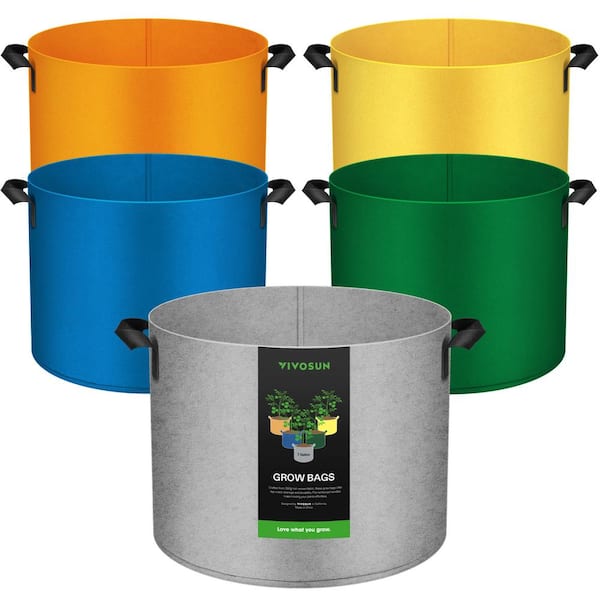
Most herb transplants from garden centers arrive in tiny containers packed with a peat-heavy mix that swings between waterlogged and bone dry. Repot them as soon as you get home into a 4 to 6 inch pot with a quality potting mix that drains well. Herbs, especially Mediterranean ones like thyme and rosemary, cannot tolerate wet roots for more than a day or two before root rot sets in.
INDIVIDUAL POTS
Best for mixed herb collections
- Each herb gets the watering schedule it needs
- Easy to move individual plants for more light
- Mint stays contained and can't take over
- Different soil mixes for different herbs
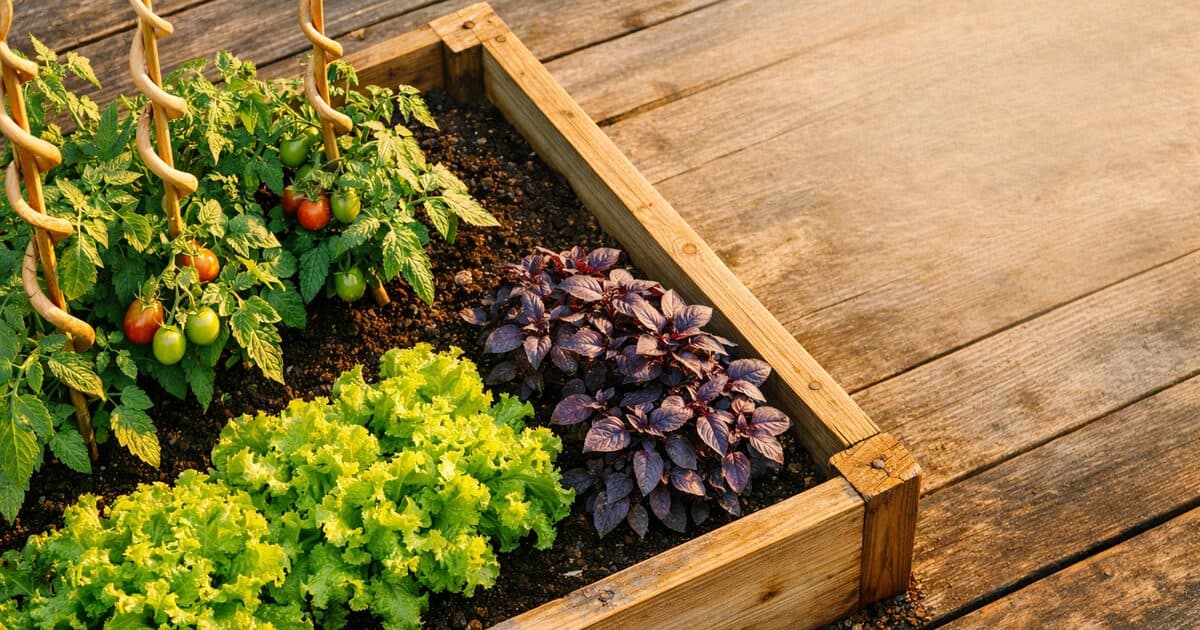
WINDOW BOX
Good for herbs with similar needs
- Space-efficient for windowsills
- Parsley, chives, and thyme work well together
- Don't mix mint with anything. It spreads aggressively.
- One watering schedule for all plants in box
The single most important container requirement is drainage. Herbs sitting in water develop root rot within a week. Use pots with drainage holes and set them in a saucer. Check the saucer after watering and empty it within an hour. Standing water in a saucer is root rot waiting to happen.
The cut-and-come-again technique
How you harvest determines whether your herb plant lasts two weeks or two years. Most people snip from the tips of stems, which is intuitive but wrong. Cutting from the tip stops growth at that stem entirely. The plant has nowhere to branch from.
Cut just above a leaf node and the plant sends out two new branches from that spot. Every correct cut doubles the stem count at that node. Do it consistently and a basil plant that looked thin in week three becomes a dense, productive bush by week eight. The growth is compounding, not linear, which is why a well-managed herb plant keeps getting better rather than slowly exhausted.
In practice: take no more than a third of the plant at once, always cut above a healthy node with clean scissors, and do it every 2 to 3 weeks. Light regular harvests keep the plant in vegetative growth and delay bolting, which is when the plant switches to seed production and leaf flavor drops noticeably.
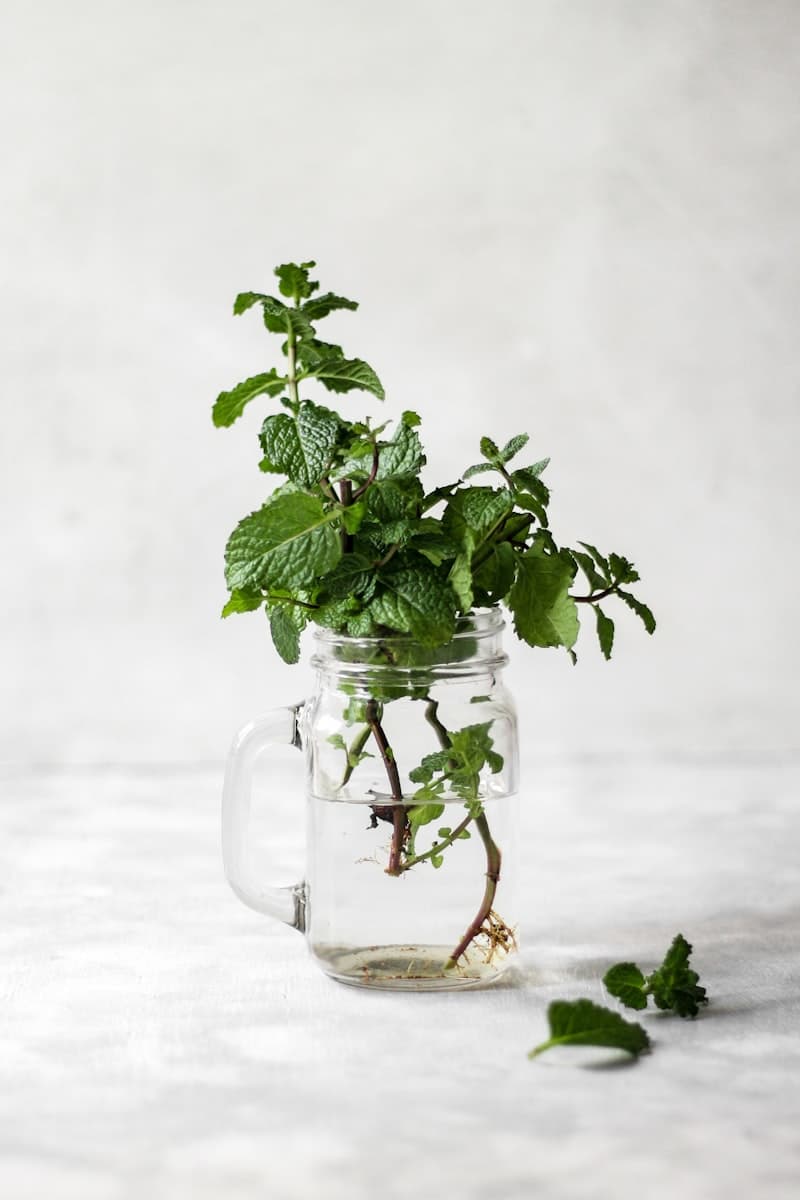
The plant that gets cut regularly grows faster than the one you leave alone. That sounds backward. It's just how herbs work.
Watering and humidity
Indoor pots dry out faster than you expect, especially during winter when heating systems pull moisture from the air. Mediterranean herbs like thyme, rosemary, and basil feel this most, but even moisture-tolerant herbs like mint and parsley can dry out quickly in a small container on a warm windowsill.
The finger test works better than any schedule: push your finger 2 inches into the soil before you water. Moist? Wait. Dry? Water thoroughly until it runs from the drainage hole, then stop. For 4 to 6 inch pots, this typically means watering every 2 to 4 days in summer and every 4 to 7 days in winter, but those numbers are just a starting point. Always follow the soil, not the calendar.
Common problems and what they mean
Yellow leaves with moist soil: Root rot from overwatering or poor drainage. Pull the plant out and check the roots. Brown and mushy means the rot is already advanced. Repot into dry fresh mix, trim damaged roots with clean scissors, and move the plant somewhere brighter while it recovers.
Pale stems leaning toward the window: Not enough light. The plant is stretching toward the source. Move it closer to the window, add a grow light, or both. Rotate the pot a half-turn every few days so every side gets an equal share of whatever light is available.
White powder on leaves: Powdery mildew. Reduce humidity, give the plants more airflow, and remove affected leaves immediately. One tablespoon of baking soda dissolved in a quart of water and sprayed on the leaves can slow the spread without damaging the plant.
Basil leaves turning black: Cold or moisture damage. Basil is a tropical plant and will show damage below 50°F. Keep it away from cold glass in winter, especially at night. Black spots that appear shortly after watering are usually fungal and a sign the soil is staying wet too long.
Sudden collapse despite adequate water and light: Likely root-bound. After a season in the same container, roots can pack so tightly they can no longer absorb water properly. Check whether roots are spiraling around the bottom or escaping through the drainage holes. Size up one pot with fresh potting mix and the plant usually rebounds within a week.
Indoor herb setup checklist
Start here before you buy plants or seeds.
- Assess the light in the intended spot. Count actual direct sun hours on a clear day.
- Choose herbs matched to your light level (see the table above)
- Source a grow light if your window gets fewer than 6 hours of direct sun
- Select pots with drainage holes. This is non-negotiable.
- Use a quality potting mix, not garden soil
- Add 20 to 30% perlite for thyme, rosemary, or any Mediterranean herb
- Repot grocery store herb plants immediately into appropriately sized containers
- Set a grow light timer to run 14 to 16 hours per day
- Learn the finger test. Water when the top 2 inches of soil are dry.
- Begin harvesting once the plant has at least 6 mature leaves
- Always cut above a leaf node with clean scissors, never from the tip
- Pinch off flower buds as soon as they appear to extend the harvest
- Rotate pots every few days to ensure even light exposure
- Check roots every few months and repot when they circle the bottom