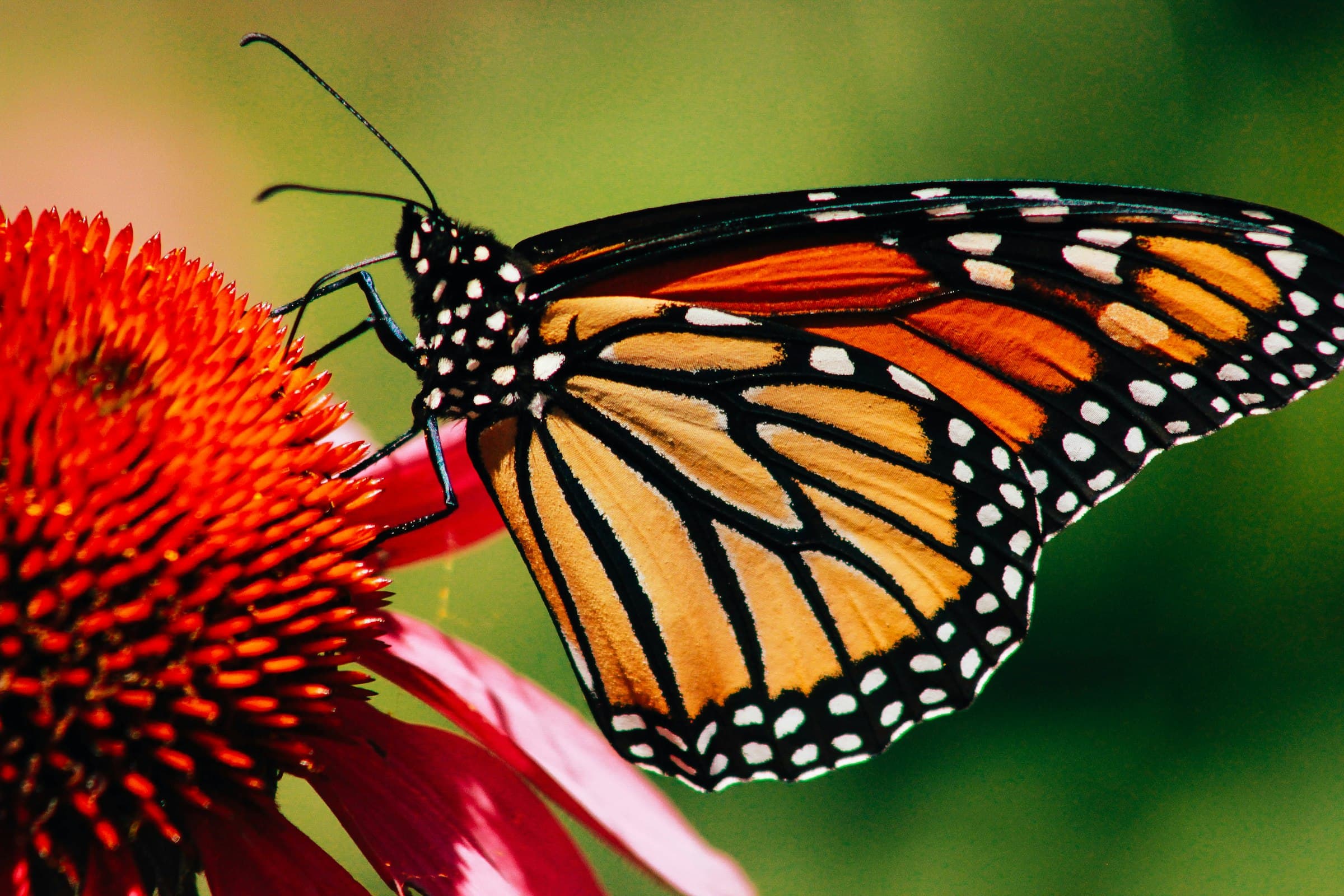
A pollinator garden is one of the most rewarding things you can plant. Native bees, monarchs, and hummingbirds will find a well-chosen patch within a season, and a corner of your yard quietly becomes a place where small wild lives begin and end. This guide walks you through what to plant, how to design it, and the simple habits that turn a tidy lawn into a working waystation for native pollinators.
Why your pollinator garden matters
Roughly 87 percent of the world's flowering plants depend on animal pollination to reproduce. Pollinators move pollen between flowers, which is how seeds and fruit form. Without that quiet labor, most of the produce aisle empties. Apples, almonds, blueberries, squash, cucumbers, melons, coffee, and chocolate all owe their existence to bees, butterflies, hummingbirds, beetles, flies, or moths.
The trouble is that pollinators are in steep decline. The United States has lost about half of its managed honey bee colonies since 1950, and many native bee species are now considered at risk. The monarch butterfly population east of the Rockies has fallen by roughly 80 percent in the last two decades. Habitat loss is the biggest single cause. Lawns and pavement do not feed bees, and neither does a tidy bed full of imported ornamentals.
Here is the part that makes the work feel worthwhile: home gardens, taken together, cover more land than every national park combined. When millions of small yards each support a handful of pollinators, the math becomes meaningful in a hurry. You do not need acreage to help. A windowbox with the right native plants will host bees within a season. A hedge of native shrubs will feed butterflies for fifty years. The barrier to entry is low and the rewards arrive almost immediately. Start with one bed, one summer, and one species you love.
- 1 in 3
- Bites of fooddepend on a pollinator
- 4,000+
- US native bee speciesmost are solitary
- 87%
- Flowering plantsrely on animal pollination
- 80%
- Eastern monarch declinesince the 1990s
The four pollinator guests you want
When most people picture a pollinator, they picture a honey bee. Honey bees are wonderful and they do real work, but they were brought to North America from Europe in the 1620s. The continent's native pollinators were here long before that, and they are the ones who most need our help. A great pollinator garden plans for four broad guests, each with different tastes and needs.
Native bees
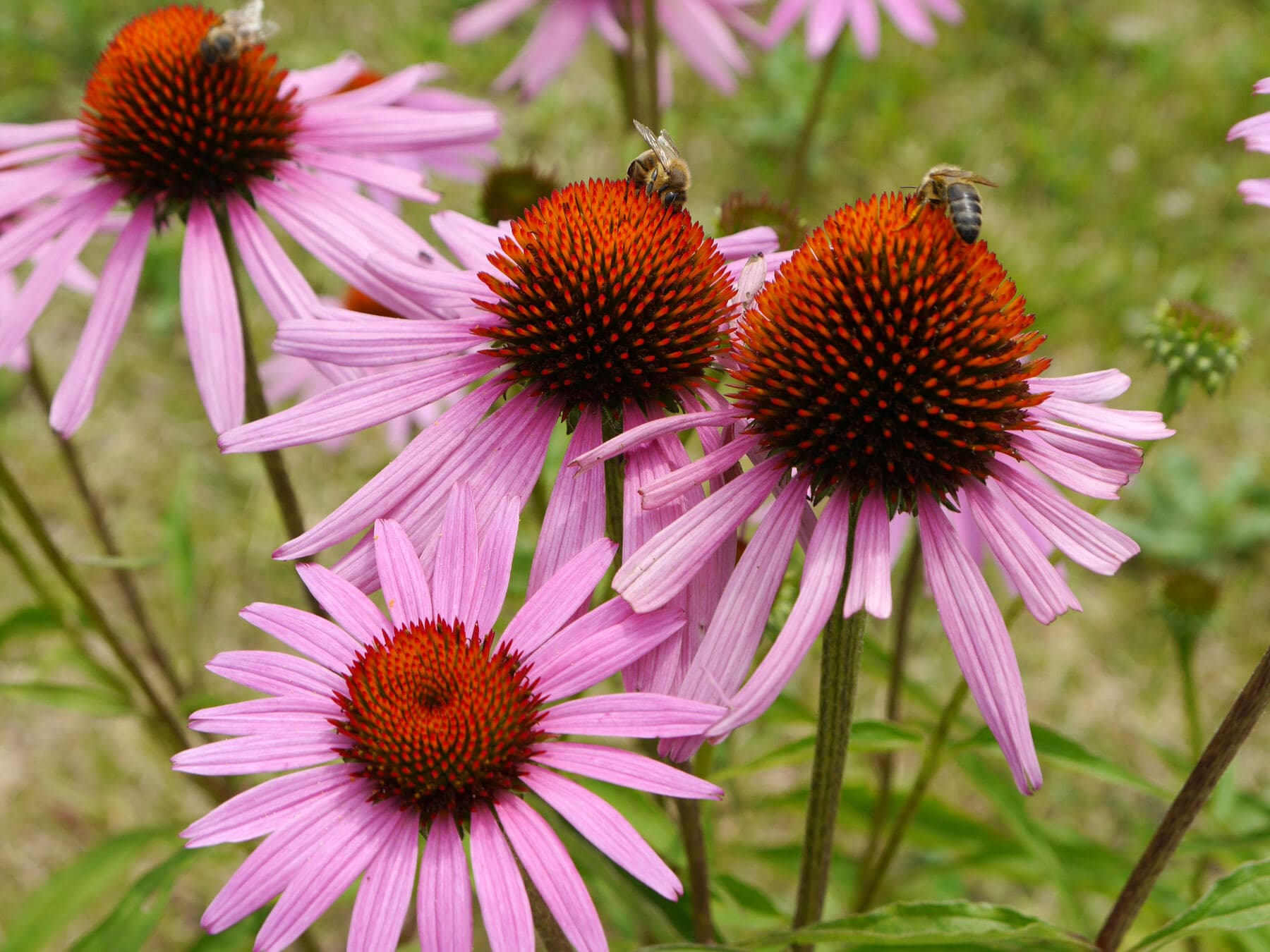
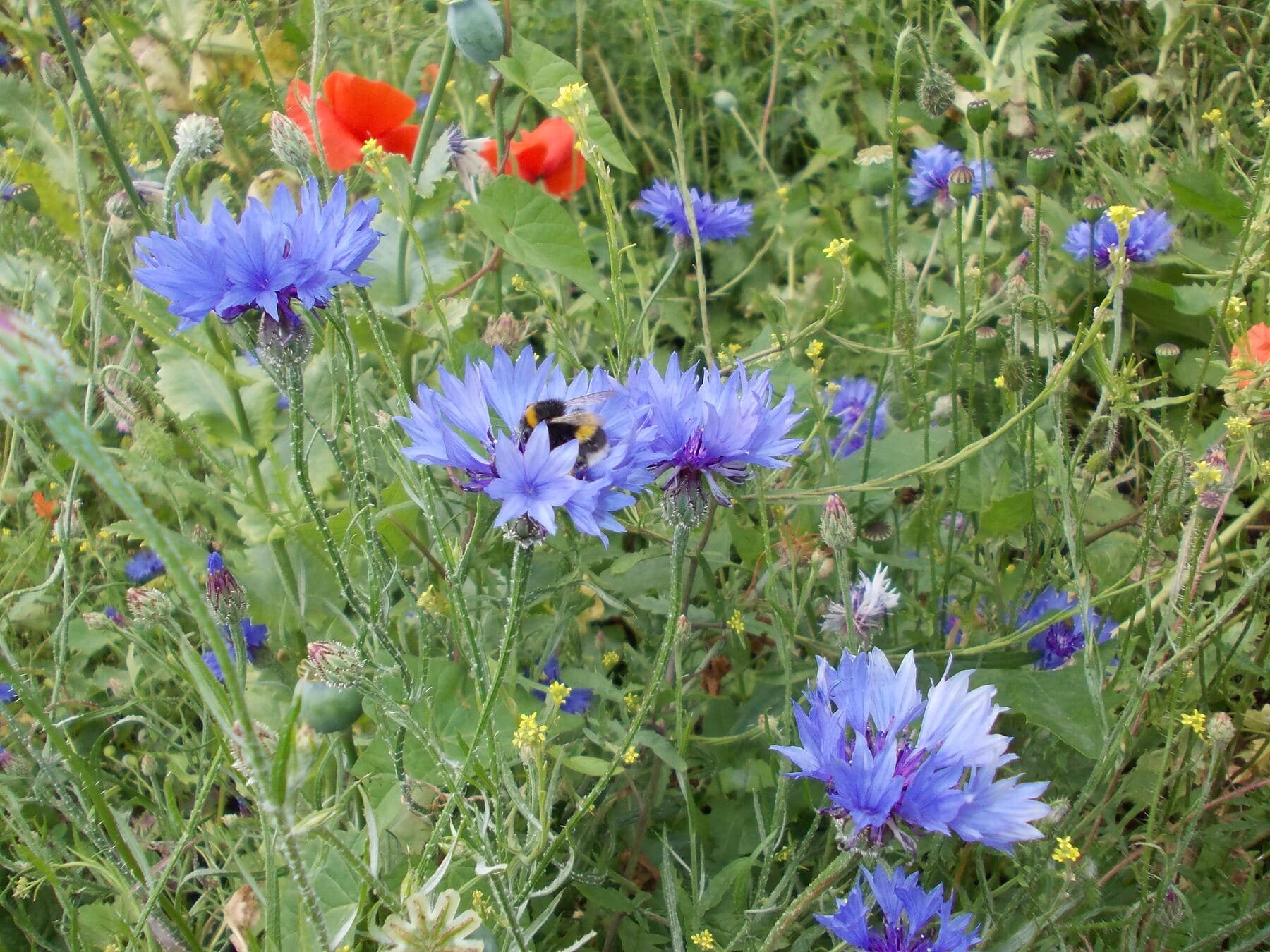
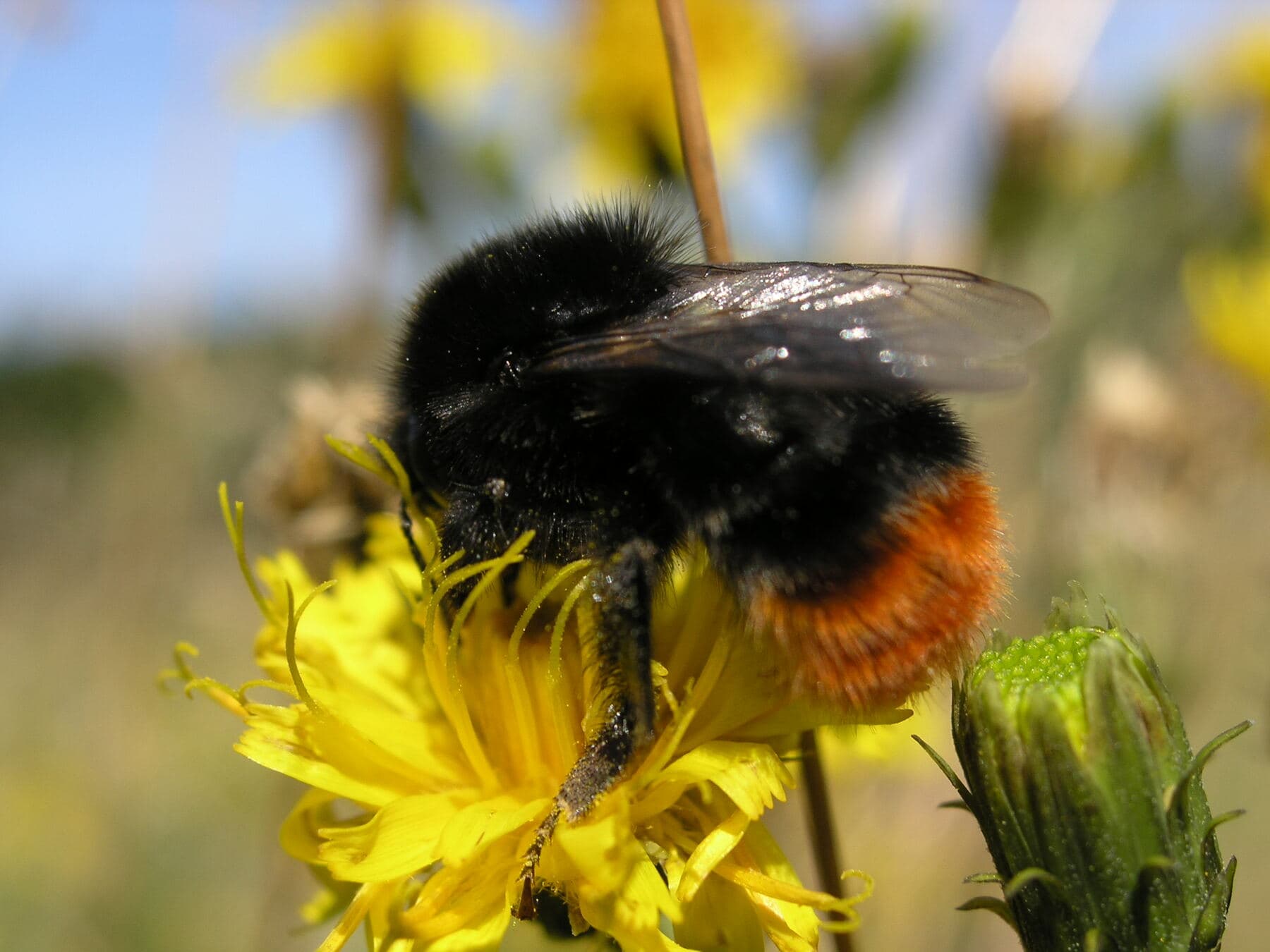
The United States is home to more than four thousand native bee species. Most are solitary, which means a single female builds her own nest and provisions her own young. About seven in ten nest in the ground, in small tunnels they dig in patches of bare or sparsely covered soil. The remaining three in ten use hollow stems, abandoned beetle galleries in old wood, or natural cavities. Many are smaller than a grain of rice. You may have a dozen species visiting a single patch of mountain mint without ever realizing they are bees, because they look more like flies or wasps to an untrained eye.
Native bees are typically calmer than honey bees. Solitary bees have no hive to defend, so stinging is a last resort and only the females can do it at all. Watch a sweat bee on a coneflower for a minute and you will see how busy and indifferent to people they are.
Butterflies
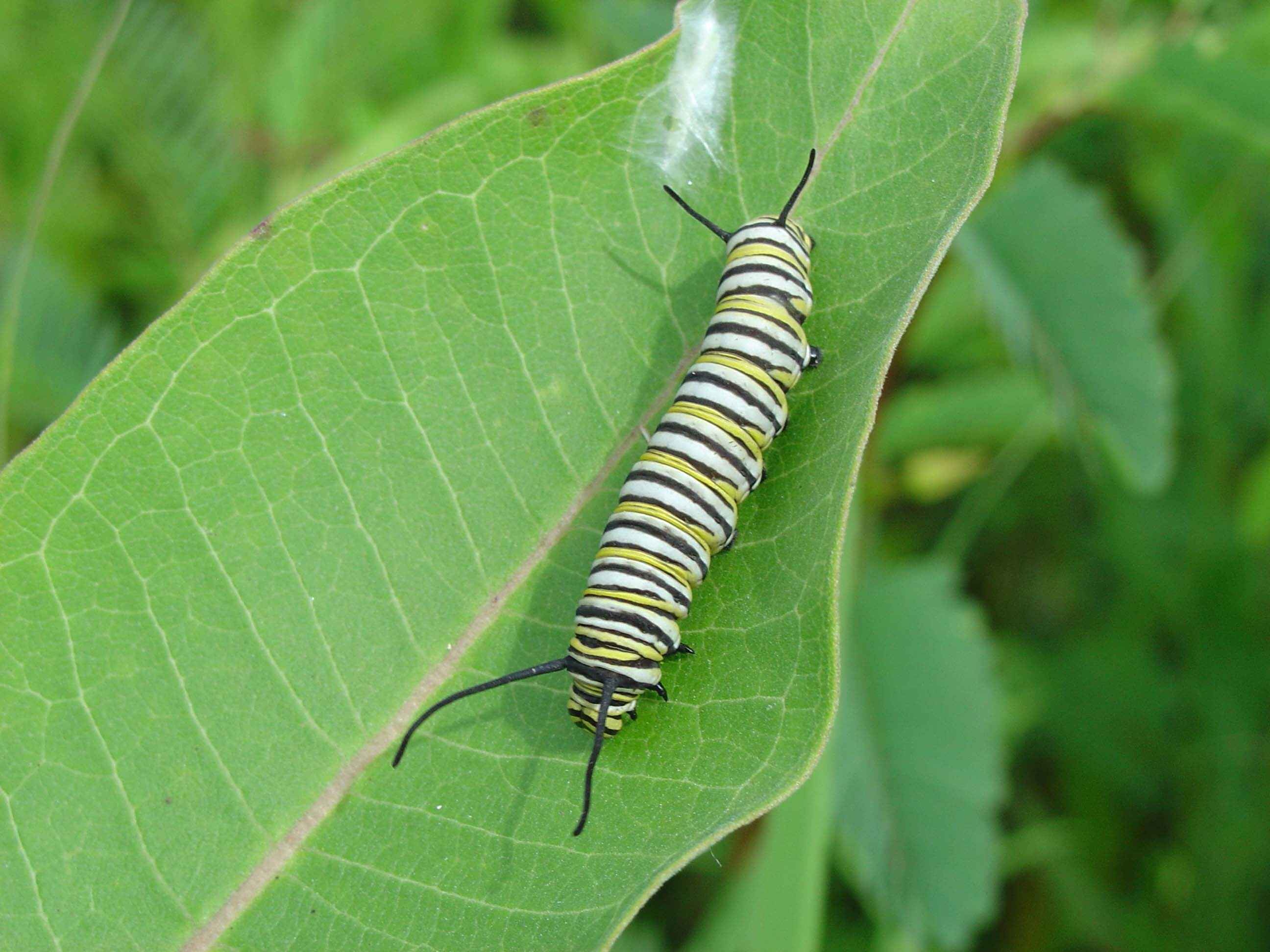
North America hosts about 700 butterfly species. Adult butterflies drink nectar, but their caterpillars eat leaves, and most caterpillars are picky. Monarchs eat only milkweed. Black swallowtails eat parsley family plants. Spicebush swallowtails specialize on spicebush and sassafras. If you want butterflies as residents and not as occasional tourists, plant their host plants and accept some chewed leaves as the price of admission.
Most native butterflies overwinter locally, often as a chrysalis tucked into a stem or under leaf litter. That detail will matter when we get to autumn cleanup.
Hummingbirds
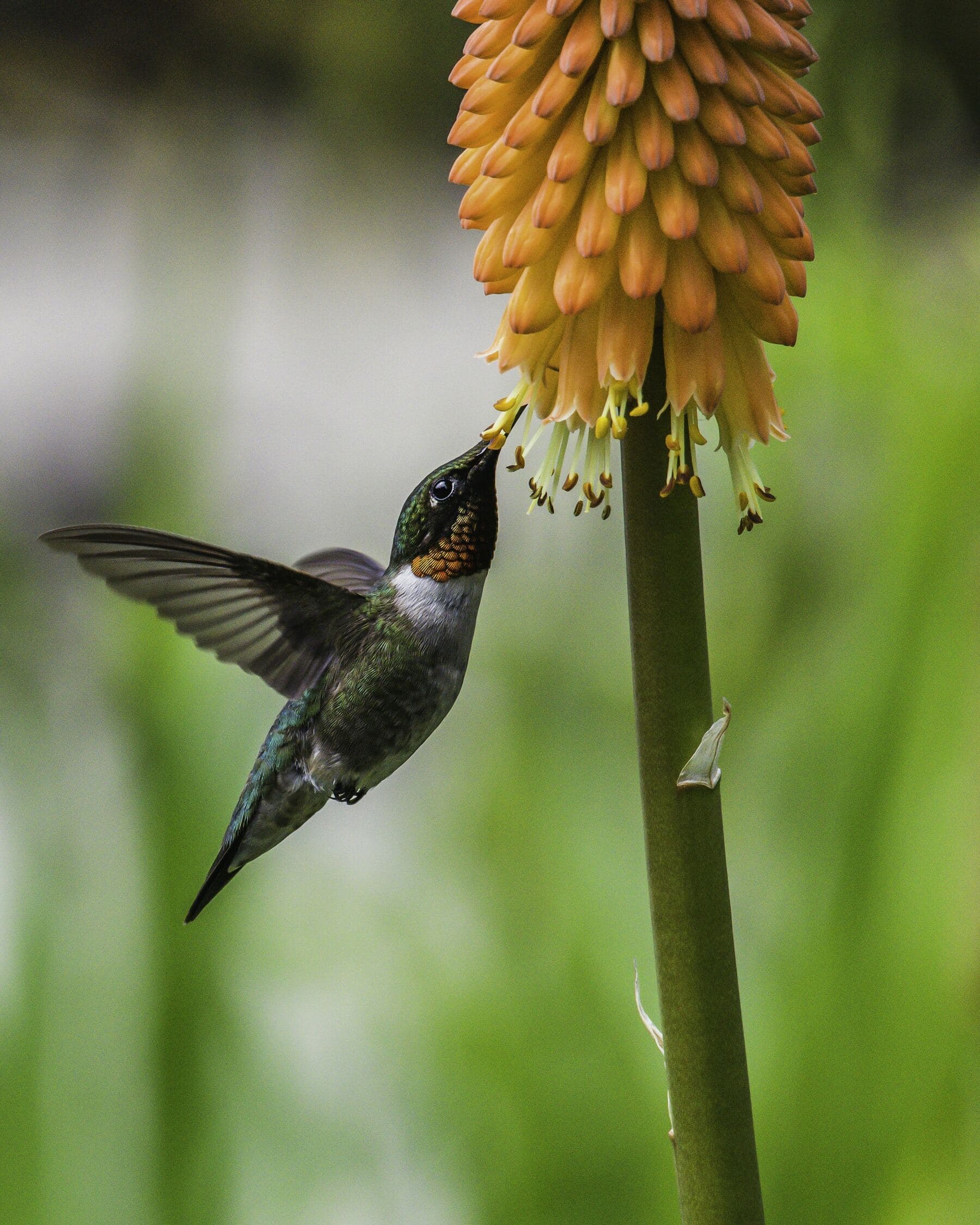
Fifteen hummingbird species breed in the United States. The ruby-throated hummingbird is the eastern resident; the rest are mostly western. They beat their wings 50 to 80 times a second, hover like helicopters, and eat insects as well as nectar. They are drawn to red and orange tubular flowers because their long bills are built for those shapes, but they will visit pink, purple, and even white blooms once they recognize a feeding station.
Beneficial insects
Moths, beetles, flies, lacewings, and many other insects pollinate by accident as they visit flowers for nectar or pollen. Moths handle a large share of nighttime pollination, especially of pale or sweetly scented flowers. Hover flies look like bees and act like bees and their larvae eat aphids by the hundred. Soldier beetles patrol goldenrod and asters. A garden full of life signals to all of these smaller helpers that they have arrived somewhere safe.
The four pillars: sun, shelter, water, food
Every pollinator garden, from a balcony pot collection to a half-acre meadow, rests on the same four pillars. Pull any one of them out and the garden becomes much harder for pollinators to use, no matter how beautiful it is.
Sun
Most pollinators are heat seekers. Bees in particular need a body temperature of about 86 degrees Fahrenheit to fly well, which means a cold morning bee is a sluggish bee. Sunny garden beds warm up earlier in the day, extending the active hours. Place your most nectar-rich plants where they catch sun for at least six hours, and where possible favor a south or east exposure so morning warmth arrives quickly.
Shade has a role too. Some woodland species, including many spring ephemerals, depend on the dappled light under deciduous trees. Aim for the right plant in the right light rather than chasing one or the other.
Shelter
Shelter means a safe place to nest, hide, and overwinter. For ground nesting bees, that means patches of bare or sparsely vegetated soil, ideally on a south-facing slope where the sun reaches in. For cavity nesters, it means hollow or pithy stems left standing through the winter and into the next late spring. For butterflies and moths, it means leaf litter under shrubs and tall stems that can hide a chrysalis through the cold months.
You do not need to give over your whole yard to a wild look. A single pithy stem cluster behind a clump of asters, or a brushpile tucked under a hedge, is often enough.
Water
Water is the most overlooked of the four. Bees use water to thin stored honey and to cool their hive on hot days. Butterflies sip minerals out of damp mud. Hummingbirds drink and bathe in shallow drips. We will cover three easy water designs further on. The important rule for now is that any water source you offer must be shallow, must include a place for small bodies to perch and drink without drowning, and must be refreshed at least every three days to avoid mosquito breeding.
Food
Food is more than nectar. Pollinators need both sugar (nectar, for flight fuel) and protein (pollen, for raising young). They also benefit from minerals, leaves, and overwintering structures. The best gardens offer all of these together, with blooms staggered so that something is open every week of the growing season.
A great pollinator garden is generous in four directions at once. It welcomes the sun, holds shelter, offers water, and never runs out of food.
Match the flower to the pollinator
Pollinators do not see flowers the way we do. A honey bee sees in ultraviolet, picks up patterns we cannot, and uses landing platforms and color contrasts to navigate. Hummingbirds see red the way we see neon. Beetles bumble across whatever is flat enough to walk on. The shape of a flower is a key, and only certain pollinators carry the matching lock.
Plant all four shapes and you serve every kind of guest. A garden with only one shape, no matter how showy, is feeding only a slice of the community. Tubular flowers like bee balm and trumpet vine pump nectar deep into a long throat that only birds and long-tongued bees can reach. Open, flat flowers like Queen Anne's lace and yarrow serve beetles, flies, and short-tongued bees. Composite flowers (anything that looks like a daisy) host butterflies and bees on a flat landing pad while the dense disc holds many small individual florets full of pollen. Irregular flowers like those in the pea family are puzzles that mostly bumblebees know how to open.
| Flower shape | Best for | Plant examples |
|---|---|---|
| Tubular / trumpet | Hummingbirds, long-tongued bees | Bee balm, trumpet vine, salvia, cardinal flower, columbine |
| Open / flat | Beetles, flies, small bees | Yarrow, Queen Anne's lace, fennel, dill, elderflower |
| Composite (daisy-like) | Bees, butterflies | Coneflower, black-eyed Susan, aster, goldenrod, sunflower |
| Irregular (pea, mint family) | Bumblebees, mason bees | Wild lupine, baptisia, anise hyssop, salvia (some) |
| Night-blooming | Moths, some bats | Evening primrose, moonflower, four o'clocks |
A garden that's never empty
Pollinators do not skip the slow weeks of spring or the wind-down of fall. Queen bumblebees emerge from underground in March or April, desperate for the first food of the year. Migrating monarchs returning north in May rely on early woodland flowers. Late-season fuel from September goldenrod and aster is what carries the next year's queens into hibernation. A pollinator garden that only blooms in July is like a restaurant that only opens for lunch on Saturdays. It will attract fewer regulars and will fail the most vulnerable visitors.
Aim to have at least three species blooming in every month from March through October. In zone 7 and warmer, push the bookends out to February and November. Even one well-chosen winter bloomer like witch hazel can be a lifesaver for a queen bumblebee that wakes early on an unseasonably warm February day.
The four bloom seasons
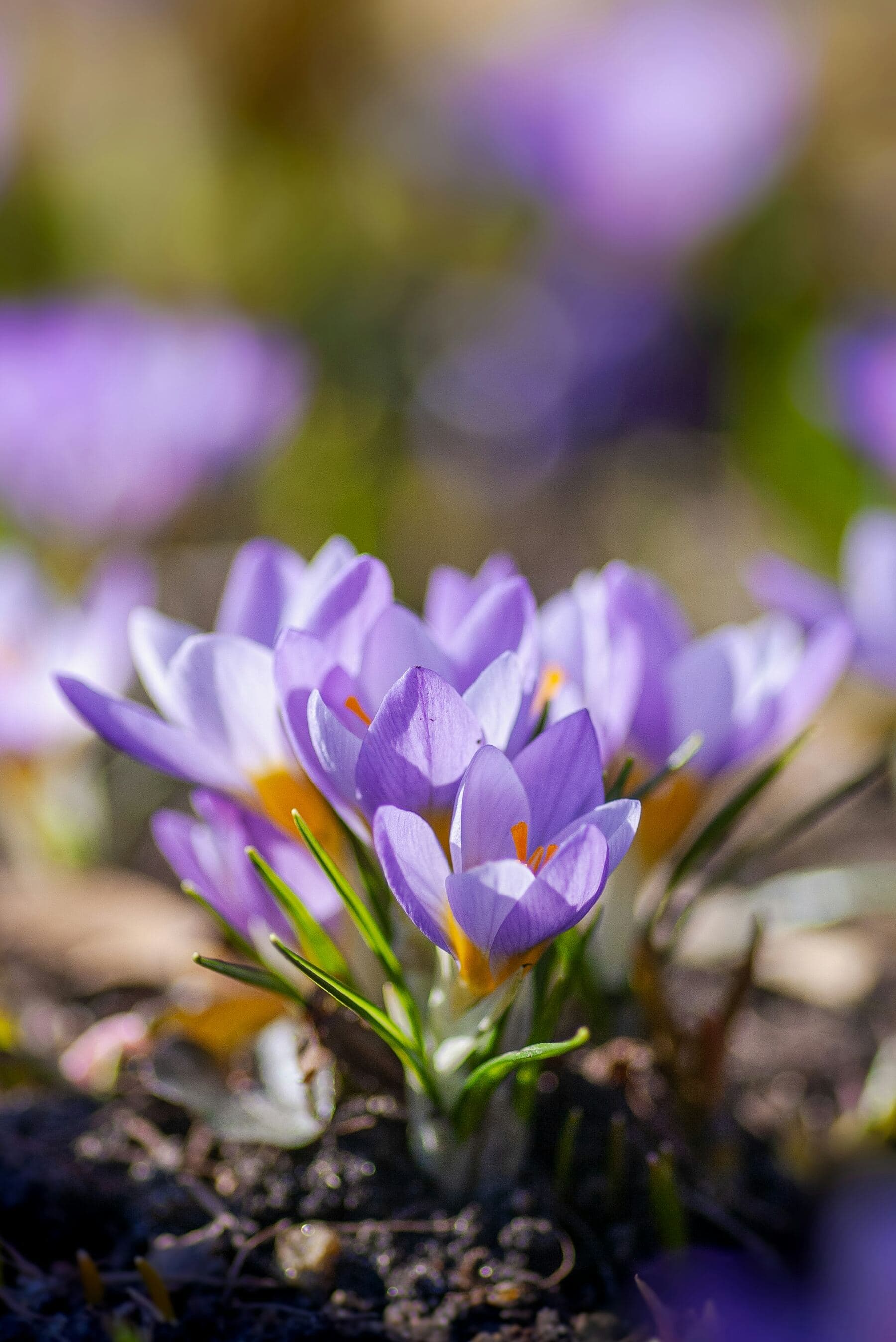
Late winter and early spring (Feb to April)
Witch hazel, snowdrops, crocus, hellebore, bloodroot, spring beauty, violets, and trout lily. These are the first sugar of the year, and they often determine whether queen bees survive their first foraging trip after emergence. Most of the showy spring shrubs (forsythia, azalea) offer little to native pollinators because they were bred for appearance. Native pussy willow is much better.
Late spring and early summer (May to June)
Wild geranium, woodland phlox, wild lupine, anise hyssop, baptisia, coral bells, foxglove beardtongue, and the first milkweeds. This is when the garden hits its first real volume of activity. By late May you should be seeing five or six bee species in any open patch.
High summer (July to August)
Coneflower, black-eyed Susan, bee balm, blazing star, butterfly weed, mountain mint, swamp milkweed, joe pye weed, and ironweed. The heaviest and most visible season. If you do nothing else, plant mountain mint and stand back. Even a small patch will host two dozen pollinator species.
Late summer and fall (September to October)
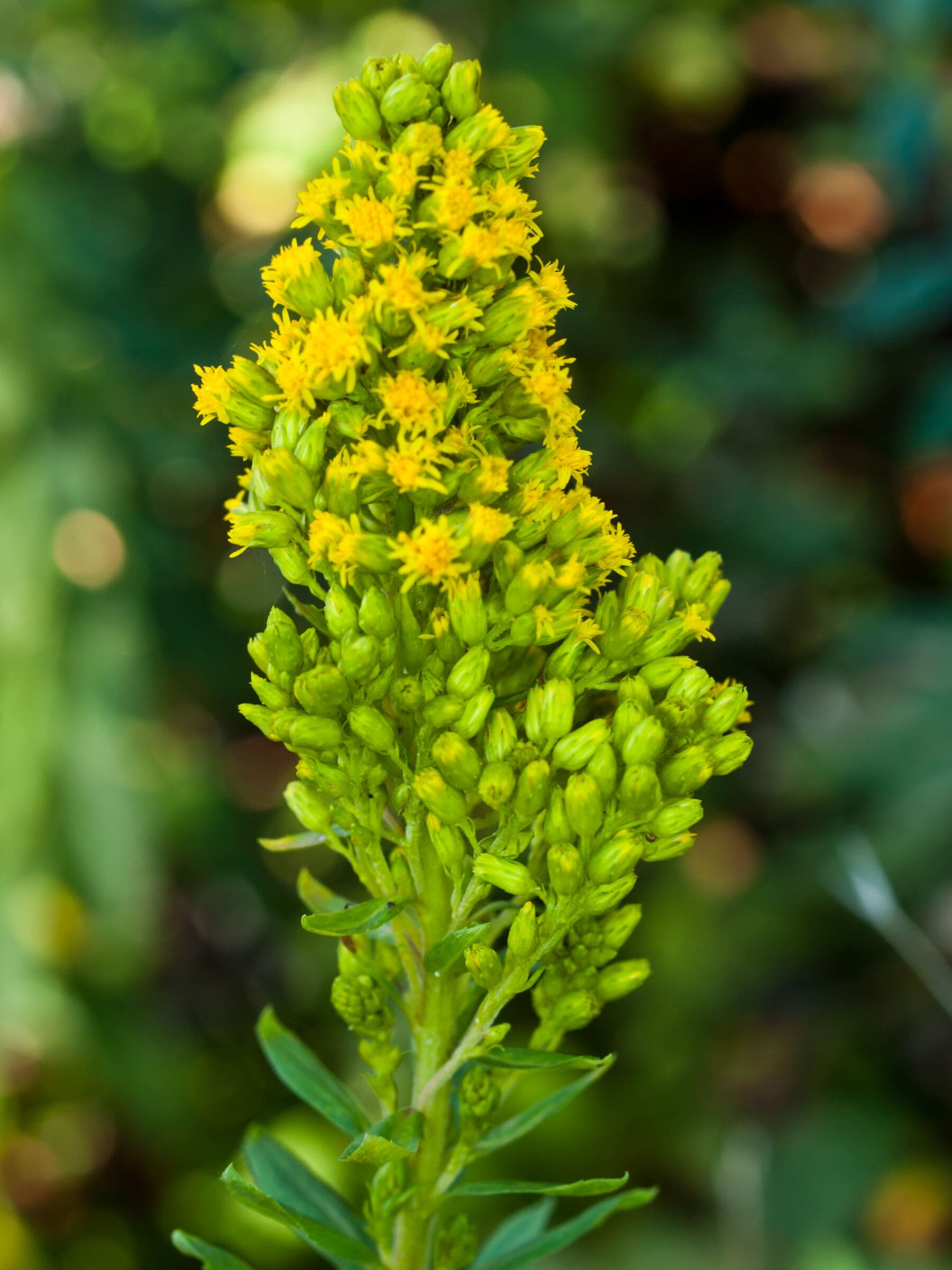
Goldenrod, asters, sneezeweed, white snakeroot, witch hazel, turtlehead, and Joe Pye's late cousins. This stretch is the most critical one for next year's success. Migrating monarchs need nectar all the way down the flyway. Native queen bumblebees fatten on this last food and go underground for winter. A garden without September goldenrod and aster is missing the most important plants on the calendar.
Native plants do the heavy lifting
A native plant evolved alongside the local insects, birds, and fungi. Those relationships go back thousands of years and produce a web of dependencies that imported ornamentals cannot replicate. A native black cherry tree in the eastern US supports more than 450 butterfly and moth species. A native oak supports more than 550. A ginkgo, by comparison, supports four. A Norway maple supports almost none.
The numbers above come from research by Dr. Doug Tallamy and others at the University of Delaware, who have spent decades counting which plants feed which insects. The takeaways are simple: native plants host vastly more caterpillar species, which feeds the songbirds that rely on caterpillars to raise their young. Native pollen is generally higher in protein. Native nectar tends to be more accessible to local bees, whose tongues evolved for those particular flower shapes. And for specialist bees (bees that gather pollen from only one or a few plant families), the right native plant is the only food that works.
"Native" is local, not regional
A plant native to Oregon may be useless to a North Carolina bee. The right yardstick is your ecoregion, which is finer than your state. The Audubon Native Plants Database and the Xerces Society's regional pollinator plant guides will help you build a list that matches your zip code.
You don't have to go all-native
Aim for natives as the backbone, especially the host plants and the spring and fall bloomers. Mix in well-behaved non-native nectar plants if you love them. A 70 percent native garden will outperform a 100 percent ornamental one by every measure. Do not let perfect be the enemy of much, much better.
Top plants by guest
Every region has its own all-stars, but the plants below punch above their weight across most of the contiguous US. Use this list as a starting menu, then check your local extension office or a regional native plant society for the exact species best suited to your zone.
For native bees
| Plant | Zones | Bloom time | Why it earns its space |
|---|---|---|---|
| Mountain mint (Pycnanthemum) | 3-8 | Jul-Sep | Single best bee plant in the US. Hosts 30+ species. |
| Anise hyssop (Agastache foeniculum) | 3-8 | Jun-Sep | Long bloom, dense flower spikes, drought tolerant. |
| Purple coneflower (Echinacea purpurea) | 3-8 | Jun-Sep | Beloved by bumblebees and small native bees. |
| Wild bergamot (Monarda fistulosa) | 3-9 | Jun-Aug | Tubular flowers; perfect for long-tongued bees. |
| Goldenrod (Solidago) | 3-9 | Aug-Oct | Late-season jackpot. Critical for overwintering queens. |
| New England aster (Symphyotrichum) | 3-8 | Sep-Oct | Final fuel of the season. Migrating butterflies love it. |
| Wild lupine (Lupinus perennis) | 3-7 | May-Jun | Host plant for Karner blue butterfly; bumblebee favorite. |
For butterflies
| Plant | Zones | Role | Notes |
|---|---|---|---|
| Common milkweed (Asclepias syriaca) | 3-9 | Host + nectar | Only food for monarch caterpillars. Plant 5+ for a colony. |
| Butterfly weed (Asclepias tuberosa) | 3-9 | Host + nectar | Drought-loving milkweed with bright orange flowers. |
| Joe Pye weed (Eutrochium) | 3-9 | Nectar magnet | Tall pink-purple flowerheads. Swallowtail favorite. |
| Spicebush (Lindera benzoin) | 4-9 | Host (shrub) | Spicebush swallowtail caterpillars need this exact plant. |
| Pawpaw (Asimina triloba) | 5-9 | Host (tree) | Sole host for zebra swallowtail. Edible fruit too. |
| Parsley, dill, fennel | All | Host (annual) | Black swallowtail caterpillars. Plant extra for the chewing. |
| Liatris (blazing star) | 3-9 | Nectar | Tall purple spikes. Monarch and skipper magnet. |
For hummingbirds
| Plant | Zones | Bloom time | Notes |
|---|---|---|---|
| Bee balm (Monarda didyma) | 3-9 | Jun-Aug | The hummingbird shrub. Red varieties are unmatched. |
| Cardinal flower (Lobelia cardinalis) | 3-9 | Jul-Sep | Likes wet feet. Vivid red, perfectly tubular. |
| Trumpet honeysuckle (Lonicera sempervirens) | 4-9 | May-Sep | Native vine, not invasive. Long bloom season. |
| Salvia (many species) | 5-10 | Jun-Oct | Long bloomers. S. coccinea and S. greggii are hummingbird gold. |
| Penstemon (beardtongue) | 3-8 | May-Jul | Tubular flowers in pinks and reds. Drought tolerant. |
| Columbine (Aquilegia) | 3-9 | Apr-Jun | Early-season hummingbird food. Tolerates part shade. |
Watch and learn: native plant survey
Drift planting and clusters
The single biggest layout mistake new pollinator gardeners make is buying one of everything. A bed of fifteen species, one plant each, may look beautiful on planting day, but it makes a poor pollinator buffet. Bees use sight to find flowers, and a single coneflower in a sea of green is a small target. Five coneflowers together is a billboard. Twenty is a bus stop.
Research from several universities, including a 2014 study from Bristol that tracked bee visits across 32 garden plant types, consistently shows that pollinators visit clusters two to three times more often than scattered singles of the same species. The economy of effort matters: a bee that has to fly farther between flowers spends more energy than she gathers.
The drift planting rule
- Plant at least five of any one species, ideally seven to nine, in a single grouping.
- Group like-species into a roughly oval drift, not a perfect circle or a tidy row.
- Repeat the same drift in two or three places across the garden to spread the visual signal.
- Stagger heights so taller plants sit at the back and shorter ones in the front.
- Choose three to five flagship species rather than fifteen one-off curiosities.
Designing in zones
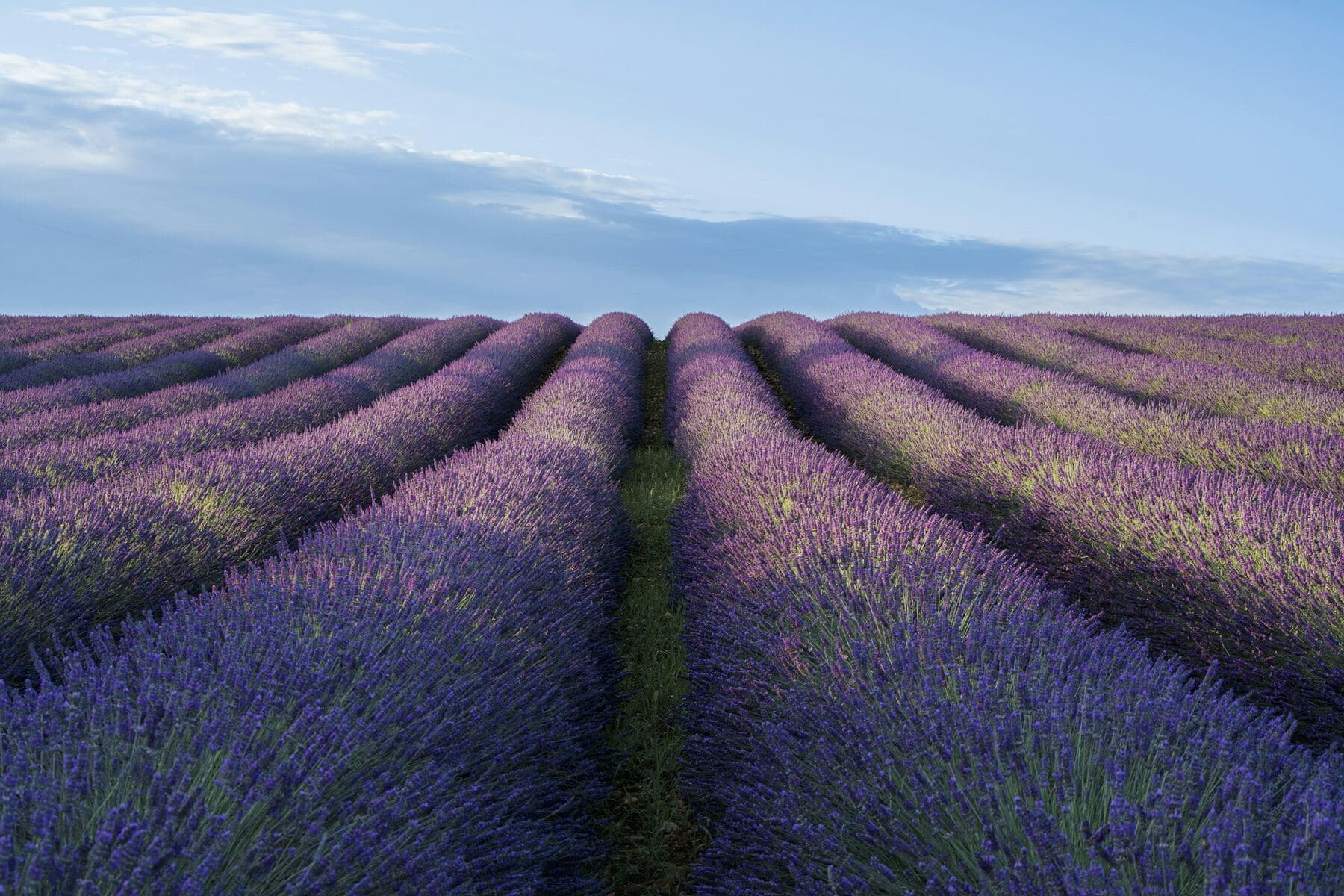
Think of your garden in zones rather than rows. A typical layout builds three or four roughly defined areas: a sunny meadow zone for summer composites and host plants, a shrubby edge for early bloomers and cavity nesters, a shaded corner for woodland natives and spring ephemerals, and a damp pocket for joe pye, ironweed, cardinal flower, and swamp milkweed. Even a small yard can fit two or three zones.
A safe drink in a hot week
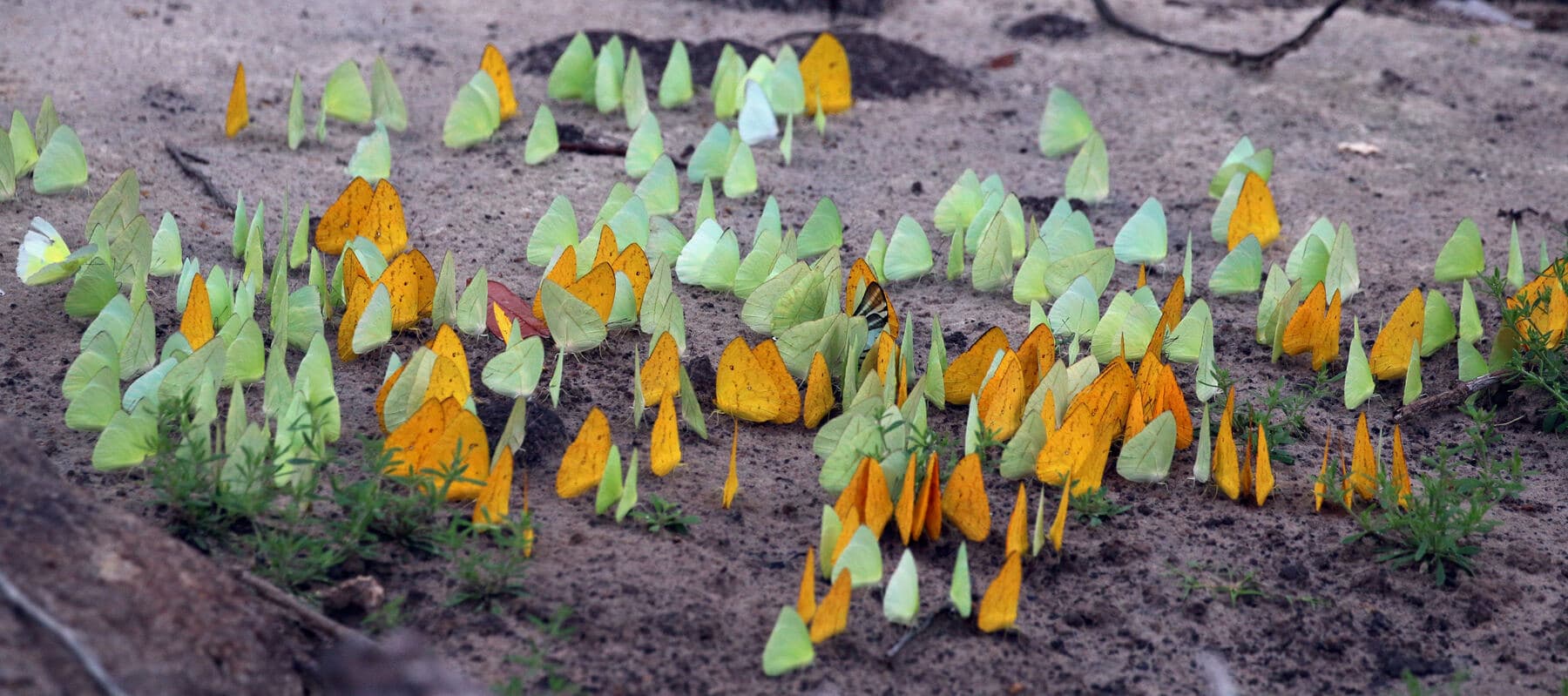
Pollinators get most of their water from nectar, but they need drinkable water too. Honey bees use it to thin stored honey and to air-condition their hive on hot days. Bumblebee colonies do the same. Butterflies engage in a behavior called puddling, in which they sip mineral-rich water from damp soil, mud, or wet sand. Hummingbirds drink and bathe in shallow drips. None of these guests can use a pond, which is too deep, or a bird bath full of deep water, which is a drowning hazard.
Three water designs that work
The pebble birdbath
Take any shallow dish (an upside-down trash can lid works in a pinch) and fill it with smooth pebbles or marbles. Add water until the stones are about half submerged. The pebbles give bees and butterflies dry footing while they drink. Refresh the water every three days to keep mosquitoes from breeding. Place the bath near your most-visited blooms, in a spot with morning sun and afternoon shade.
The butterfly puddler
A puddler is a shallow tray of damp sand or fine mud, sometimes mixed with a pinch of sea salt or a drop of compost tea for minerals. Dig a saucer-sized depression in the soil at the edge of a sunny path and keep it damp by topping it with a handful of water every couple of days. You will know it is working when you find a handful of swallowtails standing on the wet patch with their wings slowly opening and closing.
The drip stone
Place a large flattish rock in a shallow tray. Tuck a piece of moss or a corner of damp burlap on top. Set the whole thing under a slow drip from a hose or, if you want a permanent feature, from a drip irrigation line set to a few drops per minute. The moss and stone wick water along the surface so even very small bees can sip from the edge without risking a fall.
Shelter that costs nothing
The cheapest pollinator infrastructure in your yard is also the most overlooked. Nesting habitat for native bees is a matter of deciding what to leave alone, not what to buy. About 70 percent of North American native bees are ground nesters. They dig small tunnels in patches of bare or sparsely vegetated soil, lay an egg in each chamber with a ball of pollen, and seal the tunnel back up. They look nothing like a honey bee colony, and most homeowners have no idea their lawn is hosting a few hundred residents.
Bare soil patches
Set aside a corner of garden, ideally on a south-facing slope or along a sunny path edge, where you do not mulch and do not plant ground cover. The patch can be small, the size of a dinner plate is plenty, but the soil should stay loose and the spot should get sun for at least half the day. Within a season or two you will start to notice tiny holes the size of a pencil tip, often surrounded by little crumbs of soil. Those are the front doors of solitary ground-nesting bees.
A common worry is that bare soil looks untidy. The trick is to put your bare patches in less visible spots: behind a perennial drift, along a fence line, or under a hedge. Pollinators do not mind the neighbors.
Pithy stems and hollow stalks
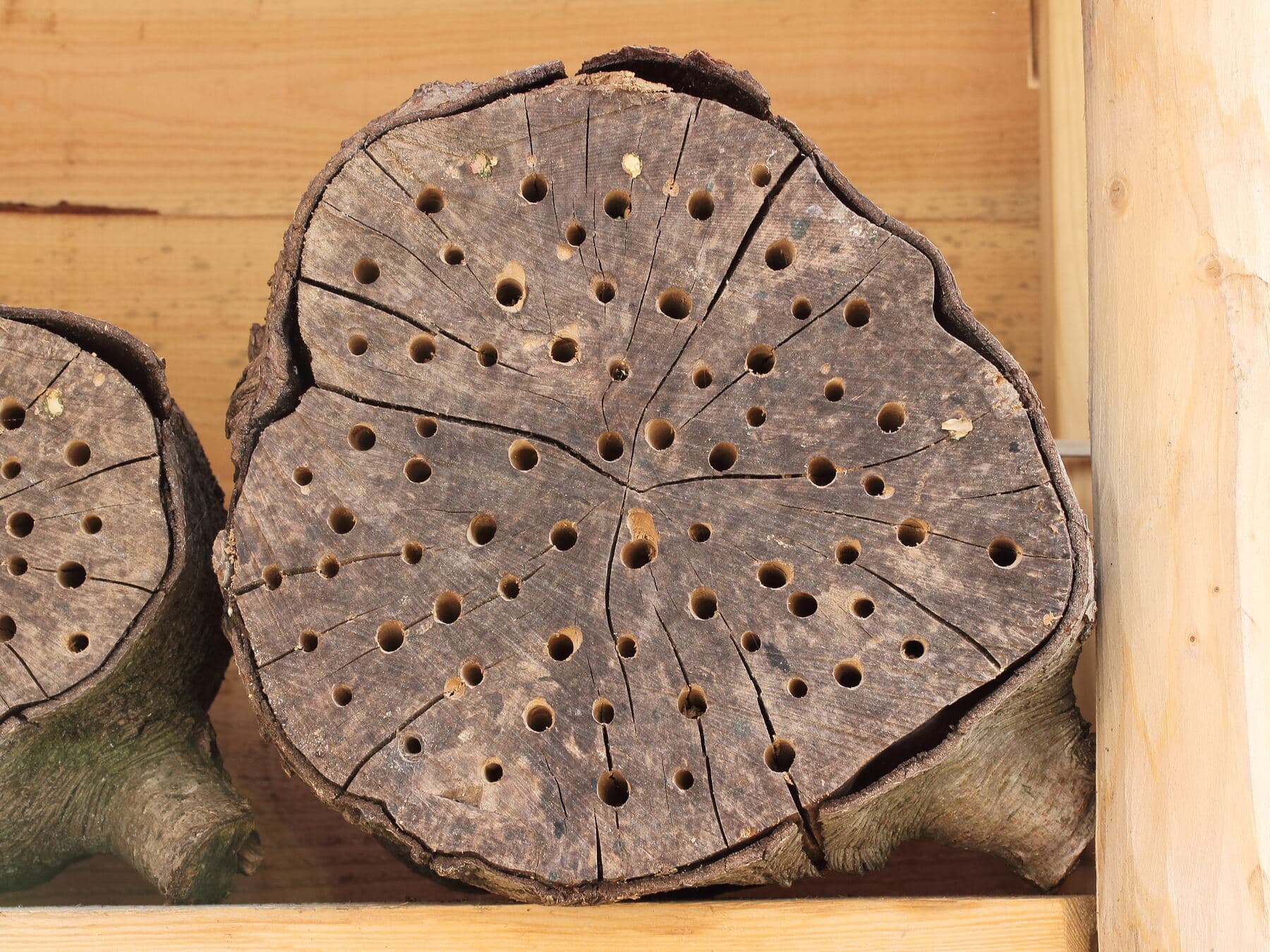
The other 30 percent of native bees are cavity nesters. They use hollow stems, abandoned beetle galleries in dead wood, and small natural cavities. Many of the plants you grow already make excellent cavity habitat: elderberry, joe pye weed, mountain mint, sumac, black-eyed Susan, and almost anything in the daisy family produce stems that bees can move into once the plants finish blooming.
The simplest way to provide cavity habitat is to leave standing stems through the winter and into the next late spring. Cut them back in May or June, by which point the next generation will have emerged. Many gardeners cut at varying heights (12 to 24 inches) which leaves a "stubble field" of available real estate without looking unkempt.
Bee hotels: helpful, but not magic
A bee hotel is a structure with hollow tubes or drilled wood that provides cavity nesting habitat. They are charming, photographable, and useful when built and maintained correctly. They are also easy to get wrong.
Bee hotel rules
- Use tubes or holes between 3 and 10 mm in diameter. Different sizes serve different species.
- Tubes should be 5 to 6 inches deep and closed at the back end.
- Mount the hotel on a sturdy post or wall, 3 to 5 feet off the ground.
- Face the entrance south or east so it warms up in the morning sun.
- Place under an overhang or eave so rain does not drive in.
- Replace tubes every two years to prevent mite and fungus buildup.
- Keep the hotel small (no more than a shoebox). Larger hotels concentrate bees and concentrate parasites.
Watch and learn: building a simple bee hotel
Brush piles and leaf litter
A small brush pile (a few branches stacked at the back of a hedge, maybe four feet wide and three feet tall) shelters chrysalises, beetles, lacewings, and overwintering frogs. Leaf litter under a shrub line is even better. Many butterflies, including swallowtails and the question mark, overwinter as adults or chrysalises hidden in leaves. We will return to this when we cover autumn cleanup.
The case for a no-spray garden
You can do everything else right, plant the perfect natives, lay out clusters, leave the leaves, and then undo it all in an afternoon with one bottle of insecticide. There is no spray that kills only the pests you do not want and spares the visitors you do. The chemistry does not work that way.
How systemic pesticides reach the nectar
Systemic pesticides are absorbed by a plant and circulate through its tissues. Neonicotinoids are the most common family. Many ornamentals at big box stores have been pre-treated by the grower before you buy them, which means the plant you bring home as a "pollinator favorite" may produce toxic pollen for weeks after planting.
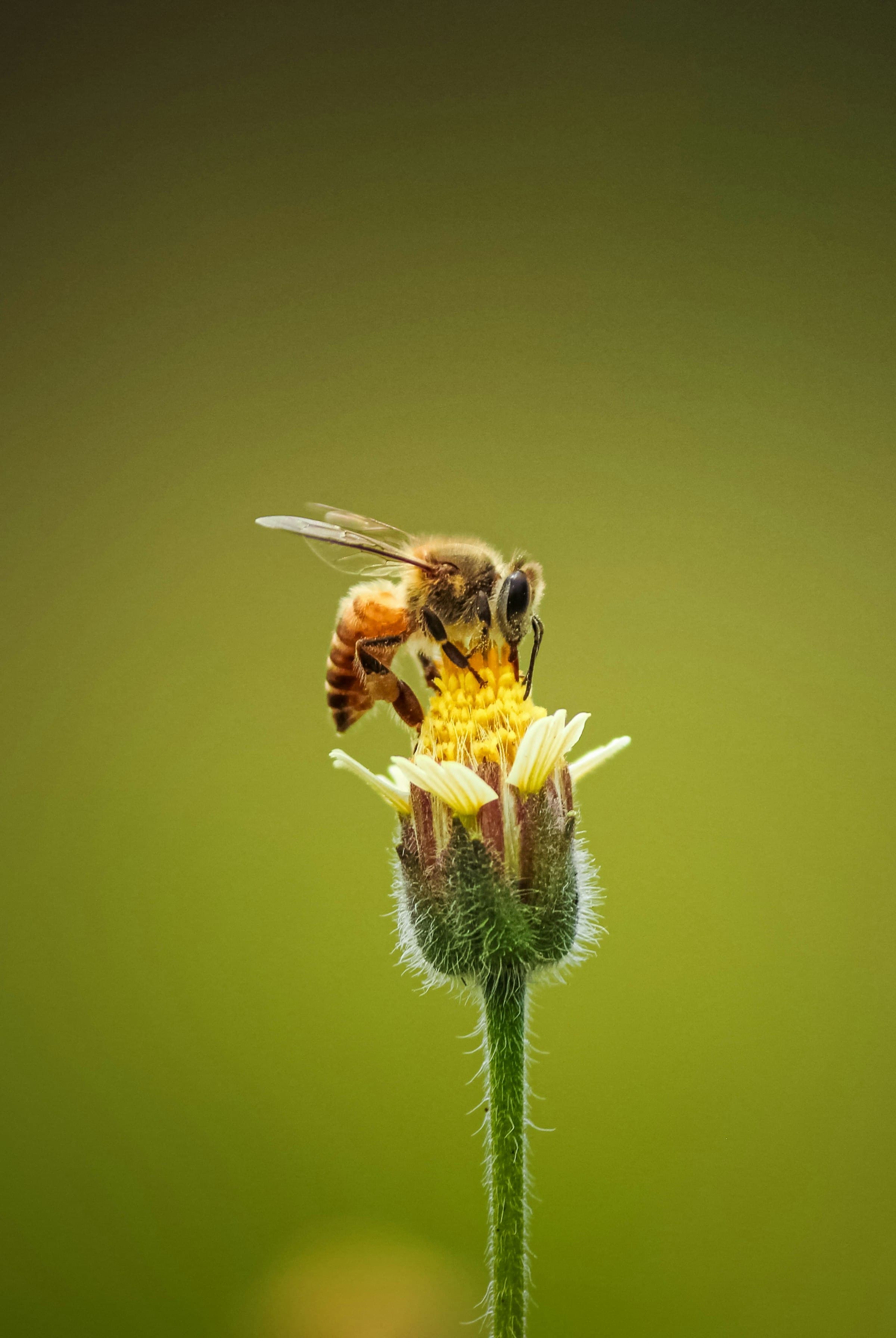
Even sublethal exposures cause problems. Bees that visit treated flowers have impaired memory and navigation, lay fewer eggs, and produce smaller workers. The colony often does not collapse for months, which is part of why the link between systemic pesticides and pollinator decline took years to establish.
Even "organic" sprays harm beneficials
Organic does not mean harmless. Pyrethrin, an insecticide derived from chrysanthemums, is broadly toxic to bees and butterflies. Spinosad and rotenone are similarly broad spectrum. Neem oil is gentler than synthetic alternatives but still kills any soft-bodied insect it directly contacts. Use any of these only as a last resort, spray at dusk when most bees are inactive, and treat only the affected leaves rather than the whole plant.
The intervention ladder
Always try first
- Tolerate a degree of damage. A garden full of perfect leaves is a garden short on caterpillars.
- Hand-pick large pests. Dropping Japanese beetles into soapy water is fast and oddly satisfying.
- Prune off badly affected sections rather than spraying the whole plant.
- Encourage natural predators by keeping diverse plantings and avoiding all pesticides.
- Check identification before reacting. Many "pests" are juveniles of beneficial species.
Last resort, with care
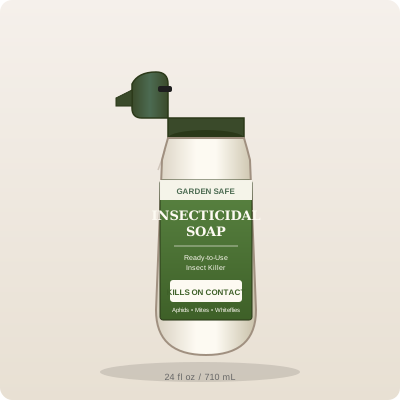
- Use insecticidal soap or horticultural oil only on affected leaves, applied after dusk.
- Spot-treat soft-bodied pests like aphids on a single stem, not the whole plant.
- Avoid all systemic pesticides without exception.
- Never spray a flowering plant. Pollinators will arrive within minutes.
- Skip broad-spectrum insecticides entirely, even organic ones, when prevention has failed.
For more on reading damage patterns and identifying what is actually eating your plants, our companion guide on garden pest control walks through the top ten pests and how to handle them organically.
Leave the leaves and the stems
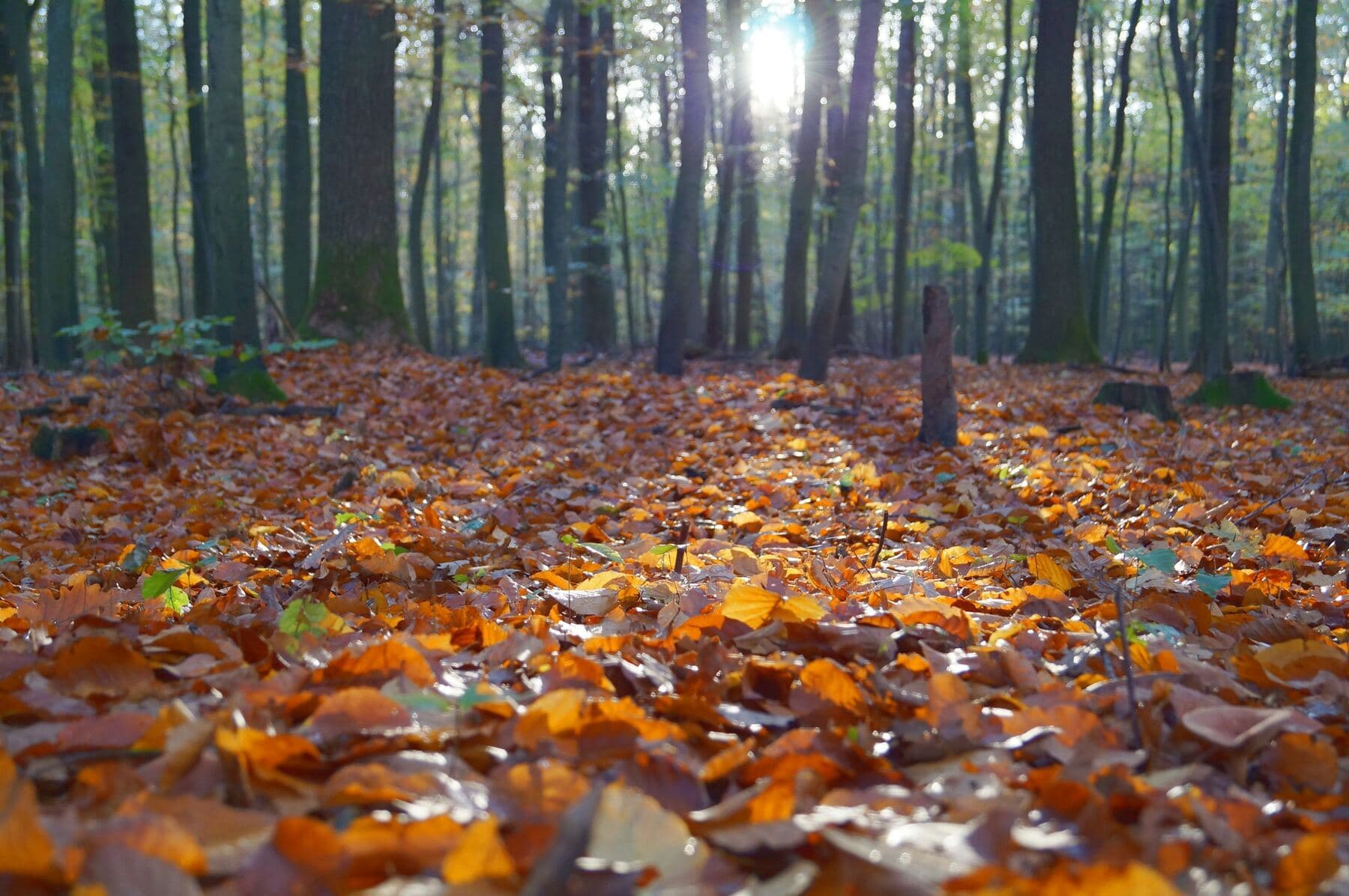
Autumn cleanup is the single biggest mistake conventional gardens make from a pollinator perspective. The tidy, raked, cut-back yard you see on the cover of garden magazines is, ecologically speaking, a disaster. Most of your butterflies and many of your native bees spend the winter on your property, hidden in leaves and stems and chrysalises. When you bag the leaves and cut the stems in October, you are throwing them away.
What "leave the leaves" actually means
You do not have to leave a thick blanket of leaves on your front lawn. The Xerces Society's "Leave the Leaves" guidance is more flexible than the slogan suggests. Rake leaves out of the lawn (a thick layer will smother grass over winter), but pile them under shrubs, around perennials, and along fence lines where they can shelter wildlife and feed soil. A two to four inch layer is ideal: enough to insulate, not so much that it smothers the plants under it. If you have a wooded edge, simply leave that part alone.
Cutting stems: timing matters
The general rule is to wait until soil temperatures stay above 50 degrees Fahrenheit for two weeks running, which usually means late April or May depending on zone. Cutting earlier kills the bees inside. Cutting at staggered heights of 12 to 24 inches leaves stubble that next season's bees can move into.
Watch and learn: leave the leaves
What to do in fall
- Leave perennial stems standing through winter into late spring.
- Pile leaves under shrubs and along fence lines, 2-4 inches deep.
- Skip mulching with bark over leaf litter; the leaves are already mulch.
- Mow lawn high (3+ inches) for the last cut so it tolerates a leaf layer.
- Keep vegetable beds tidy if they harbor real disease, otherwise leave them.
What to skip
- Cutting all perennials to the ground in October.
- Bagging every leaf and sending them to the curb.
- Power-washing the entire bed clean of debris.
- Tilling the vegetable garden in fall (kills ground-nesting bees).
- Burning fallen brush piles where possible. They are valuable habitat.
A neighborhood-friendly version
If you have HOA pressure or simply want the front yard to look tidy, try a "messy in the back, tidy in the front" approach. Cut stems and rake leaves only in the most visible parts of the yard. Leave everything from the side fence back. A small sign that says "Pollinator habitat: leaves left intentionally" goes a long way toward changing the conversation.
Common mistakes (and the fix)
Even thoughtful gardeners trip up here. The list below covers the handful of errors that come up again and again, and the small adjustment that fixes each one.
Too much lawn
A turf-grass lawn is a green parking lot for pollinators. It offers no nectar, no pollen, no host plants, no nesting habitat. The fix is not to remove all your lawn at once. Start with one bed along the edge, replace it with a pollinator drift, and watch what happens. You will likely want to do another patch within a year.
Only nectar plants, no host plants
A garden full of coneflowers, salvia, and zinnias will attract butterflies, but those butterflies will not lay eggs there because their caterpillars cannot eat any of those plants. The fix is to add at least three host plants matched to the butterflies in your region: milkweed for monarchs, parsley family for swallowtails, violets for fritillaries, asters and sunflowers for crescents.
Only summer bloomers
A garden of only July and August flowers is a garden that fails its guests for ten months of the year. The fix is to add at least two spring bloomers (witch hazel, crocus, columbine, or violets) and two fall bloomers (goldenrod, asters, sneezeweed). Aim for at least one species blooming every month from March through October.
Double-flowered cultivars
Plant breeders sometimes select for flowers with extra petals ("double" coneflowers, "double" rudbeckias, "double" zinnias). Those extra petals replace the flower's reproductive parts, which is to say, the pollen and nectar. A double-flowered echinacea is beautiful and almost useless to pollinators. The fix is to choose straight species or single-petaled cultivars when shopping. The plant tag will usually say "double" if it is one to avoid.
Over-mulching
A heavy bark mulch layer over every inch of bare soil eliminates ground-nesting bee habitat. The fix is to leave at least 20 percent of your bed surface mulch-free, especially in sunny spots. Group the mulched areas (around shrubs, along path edges) and let some areas stay open soil.
"Pollinator-friendly" non-natives
Butterfly bush (Buddleja davidii) is sold as a butterfly magnet and does feed adult butterflies, but it is invasive in many states and hosts no caterpillars. The fix is to swap it for a native shrub that does both jobs: New Jersey tea, summersweet, button bush, spicebush, or native viburnum. The label "pollinator-friendly" on a plant tag is not a substitute for checking whether the plant is native, host or nectar only, and free of systemic pesticides.
Your first month, week by week
The single most discouraging thing about a new pollinator garden is how big the project can feel. Here is a simple four-week plan that assumes you start with a typical lawn and end the month with a working pollinator bed. Adjust the timeline if your weather is not cooperating, and remember that a small bed done well beats a big bed done halfway.
Week 1: Look and decide
- Walk your yard at three different times of day. Note where the sun is at 9 a.m., noon, and 4 p.m.
- Pick one spot for your first bed. Aim for at least 6 hours of sun and a footprint of at least 4 x 8 feet.
- Sketch the bed shape on paper. Curves read more natural than straight lines.
- Make a plant list with three flagship species and one host plant. Choose natives matched to your zone.
- Order plants from a local native plant nursery, mail-order specialty nursery, or local plant sale.
Week 2: Remove the lawn
- Cover the area with cardboard (the kind without tape or shiny inks).
- Wet the cardboard thoroughly so it stays in place.
- Cover with 4-6 inches of leaf compost, wood mulch, or untreated grass clippings.
- Wait 4-6 weeks for the lawn to die in place. (If you cannot wait, dig the sod out by hand.)
- Do not use herbicide. The residue can persist in soil for months and harm pollinators.
Week 3: Amend and plant
- Test soil for pH and basic nutrients (most extension offices offer this for under $20).
- Amend with compost only as needed. Most natives prefer lean soil over rich soil.
- Plant in clusters of 5-9 of each species. Space according to the plant tag, then cluster.
- Water deeply at planting. Once established (after 4-6 weeks), most natives need only occasional water.
- Top with 2 inches of leaf or wood chip mulch, but leave bare soil patches for ground nesters.
Week 4: Add water and habitat
- Place a pebble birdbath or simple shallow dish near the bed.
- Drag a few branches into a corner to start a small brush pile.
- Mark one bare-soil patch (size of a dinner plate, in a sunny corner) and protect it from mulch.
- Photograph the bed. You will love comparing it to the same view next year.
- Sit and watch for fifteen minutes. The first visitors usually arrive within hours.
If you finish week 4 with a planted bed, a water source, a brushpile, and a bare-soil patch, you have built a pollinator habitat. The rest of the year is mostly observation, occasional weeding, and the deep pleasure of watching life take up residence.
You do not need to finish a pollinator garden. You only need to start one. The garden will do most of the work after that.
A five-year vision and how to certify your garden
Most pollinator gardens look thin in year one and modest in year two. By year three, the perennials are filling in. By year five, the bed is a different organism: dense, layered, and humming with life from sunrise to dusk. The garden becomes more self-sustaining every year. Plants self-sow, pollinators arrive in greater numbers, and the soil ecosystem (which is doing as much work as the plants above ground) settles into its rhythm.
What to expect, year by year
- Year 1
- EstablishmentSparse, weed pressure, 3-5 pollinator species
- Year 2
- Filling inPlants double in size, 8-12 species
- Year 3
- Full bloomSelf-sowing begins, 15-25 species
- Year 5
- Mature habitatLayered structure, 30+ species, hummingbirds nest
Certification programs
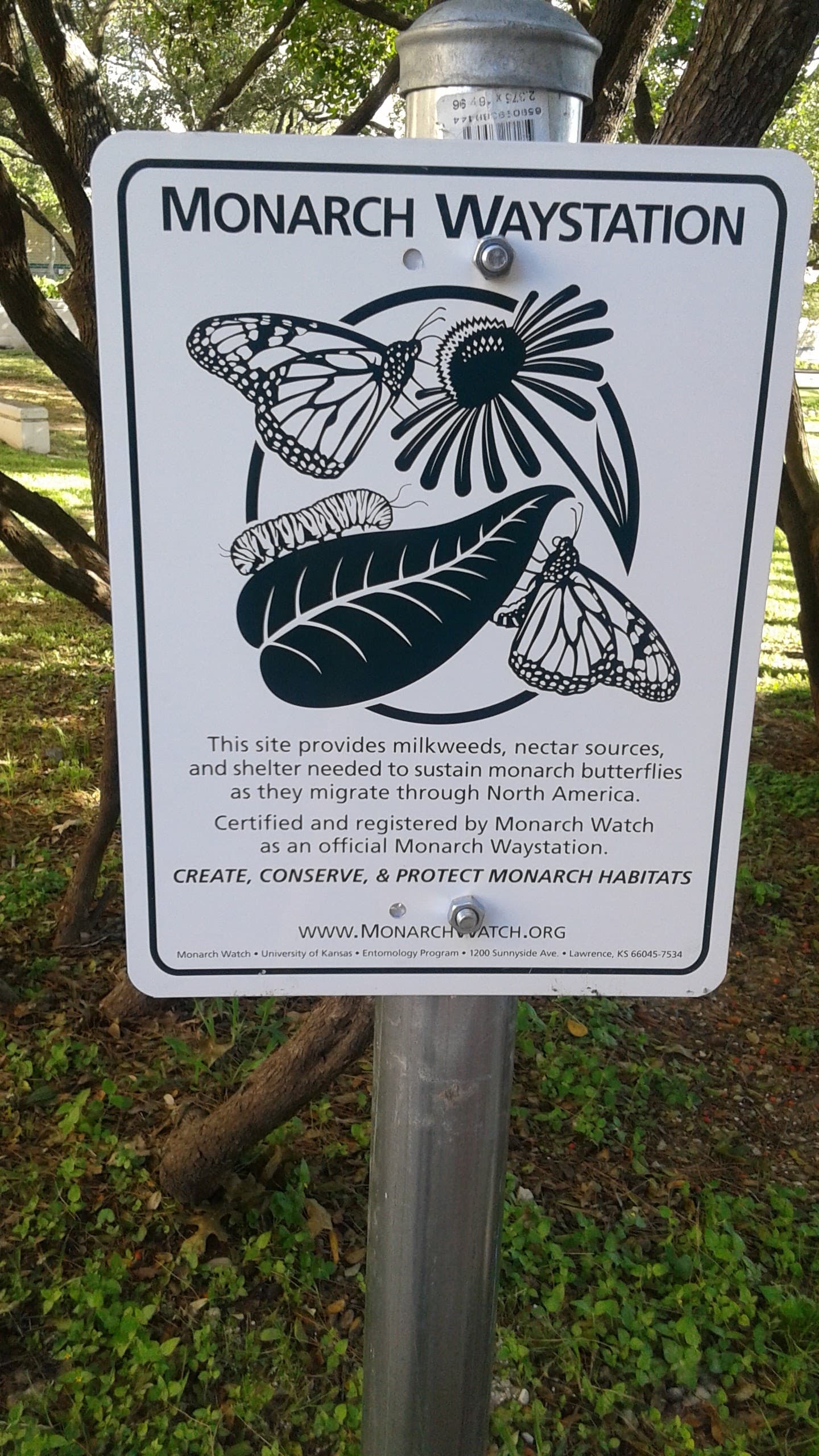
Several organizations offer free or inexpensive certifications for pollinator gardens. Beyond the certificate itself, the application process gives you a checklist of habitat features and the sign in your yard helps neighbors understand why your garden is "messier" than it might otherwise be.
| Program | Best for | Cost | What you get |
|---|---|---|---|
| Monarch Watch Waystation | Monarch-focused gardens | $20 | Yard sign, online registry, education materials. |
| NWF Certified Wildlife Habitat | All wildlife | $20 | Yard sign, certificate, garden assessment. |
| Xerces Pollinator Habitat | Bees and butterflies | $20 | Sign, conservation publications. |
| Audubon Bird-Friendly | Birds + insects | Free or $ | Plant database access, regional guides. |
Watch and learn: monarch garden specifics
Designing the next phase
Keeping a journal
Some of the best garden moments arrive on quiet afternoons when nothing in particular happens, except that a sweat bee you have never seen before lands on a coneflower for ninety seconds. A simple journal (a paper notebook or a phone notes file) lets you track what you are seeing, when blooms open, when migrants pass through, and which plants are thriving. After a couple of seasons you will be able to predict the bumblebee emergence to within a week, and you will catch yourself looking forward to it.
The neighborhood ripple
One pollinator garden helps. Two on the same block start to feel like a neighborhood. Five connect into a small corridor that bees and butterflies can travel along, and that corridor extends their range and their resilience. The fastest way to grow a pollinator movement is to start your garden well, hold a casual open garden afternoon, and offer a bag of mountain mint divisions to anyone who wants one. Every yard you help convert pays forward for years.
The best moment in a pollinator garden is the one a year from now, when you will glance up from coffee and notice that the air over your asters is full of motion you barely needed to plan.